Color ideas
Straight answers about picking wall colors. Why a swatch lies under store lights, what suits a north-facing room, and how to see a color on your own wall before you buy a single tin, with which app.
-
 Comparison
AI or a paint visualizer: which to trust
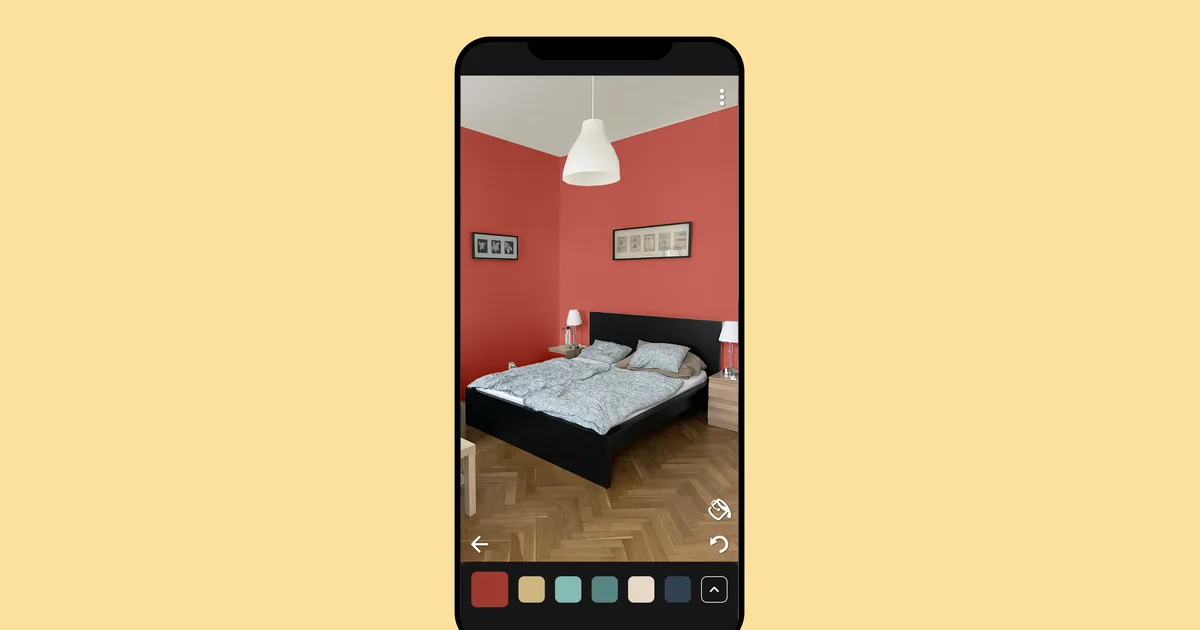
An AI image tool can repaint a photo of your room from a prompt, and it's a quick way to explore ideas. But it redraws the picture, so check that nothing else changed. To judge one specific paint color on your own walls, a paint visualizer changes only the walls you tap, in the color you set.
-
 How to
Change the wall color in a photo
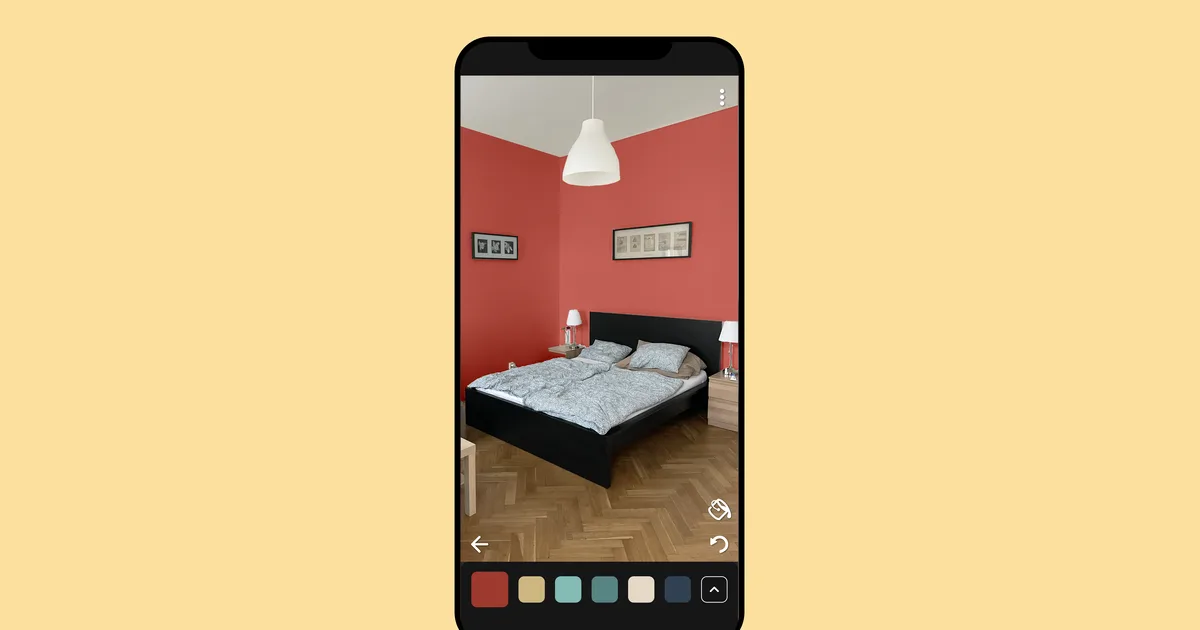
Open the photo in a paint visualizer app, tap the wall and pick a color. Unlike a filter in a photo editor, it fills the wall up to its edges and keeps the shadows and texture, so the result looks painted rather than covered in flat color.
-
 How to
A paint visualizer for any paint brand
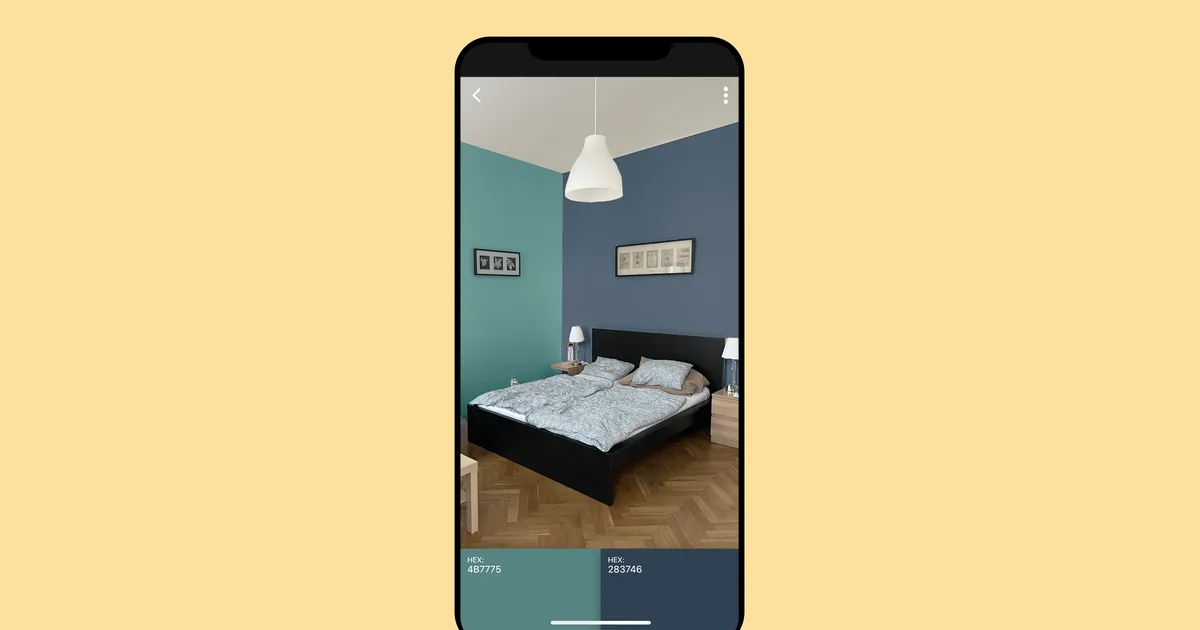
Paint makers' apps show only their own brand. To compare colors from several brands on one photo of your room, use a brand-neutral visualizer like Paint my Room and type each color's HEX code, so one wall can wear a Benjamin Moore color and the next a Behr one.
-
 Comparison
Paint visualizer apps: which one to use
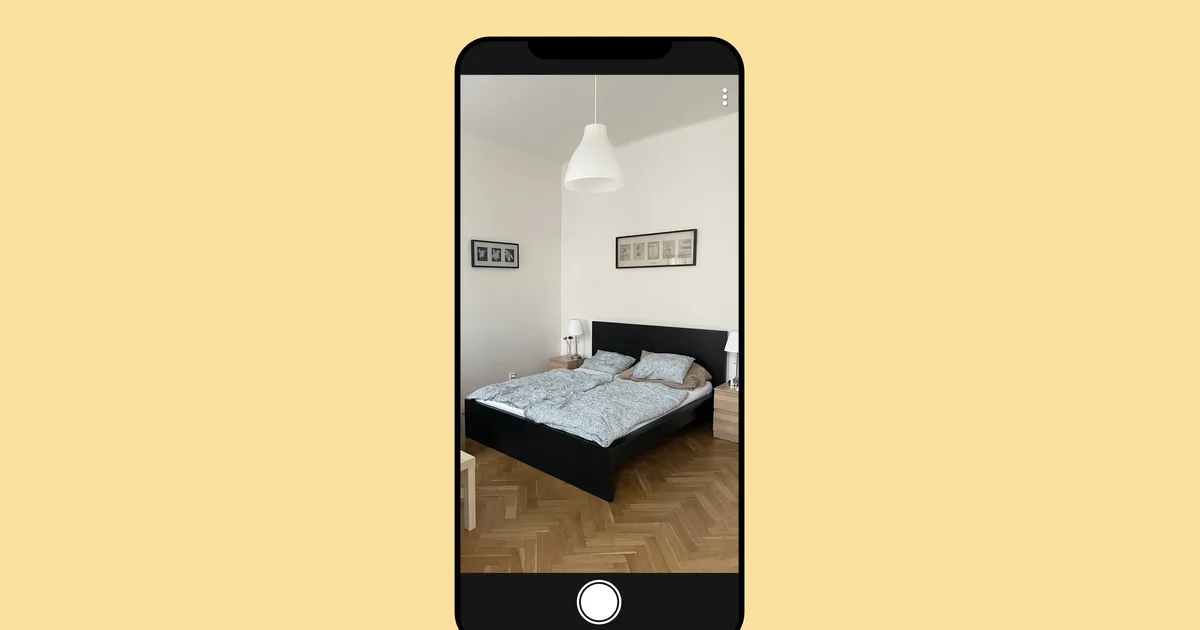
If you know which brand you'll buy, use that maker's free app: it has every one of its colors by name and number. If you're comparing brands, or your color comes from somewhere else, use a brand-neutral visualizer like Paint my Room and type the color's HEX code.
-
 How to
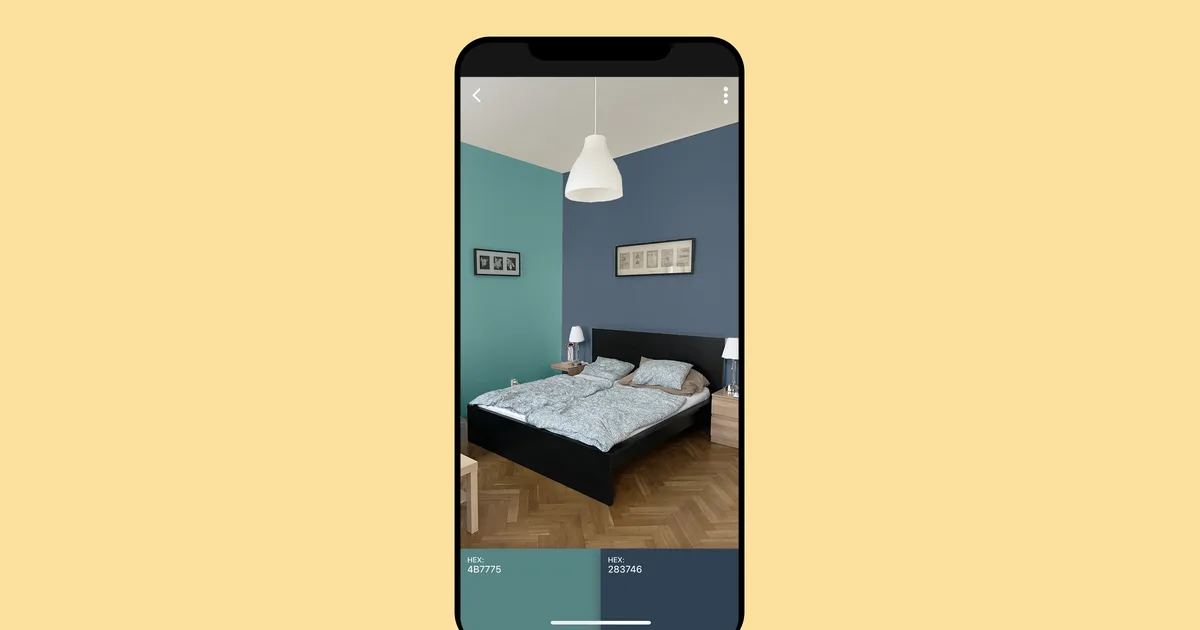
See a HEX code on your wall
Open a photo of your room in a paint visualizer that accepts HEX codes, type the code and tap the wall. In Paint my Room that's Add HEX color in the editor's menu, and it works for any color: a paint maker's shade, a designer's palette or a color from a website.
-
 How to
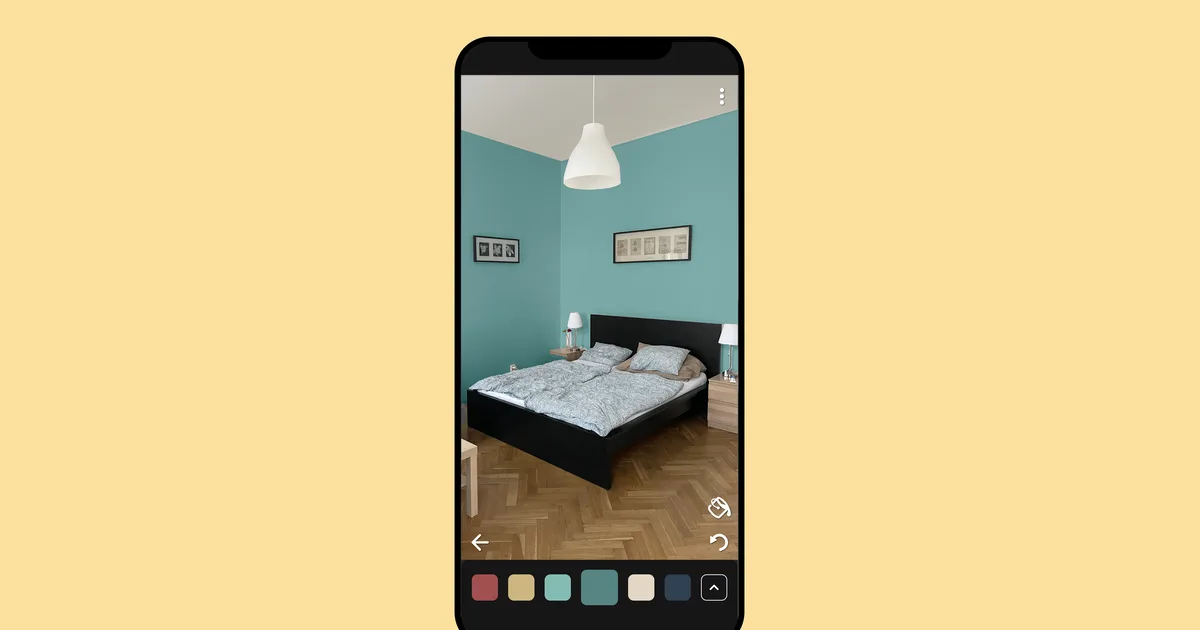
See paint colors on your walls before you paint
Take a photo of the room and try colors on it in a paint visualizer app, or point a paint maker's live camera view at the wall. Use either to get from dozens of colors to two or three, then put real samples of those on the wall.
-
 Choosing color
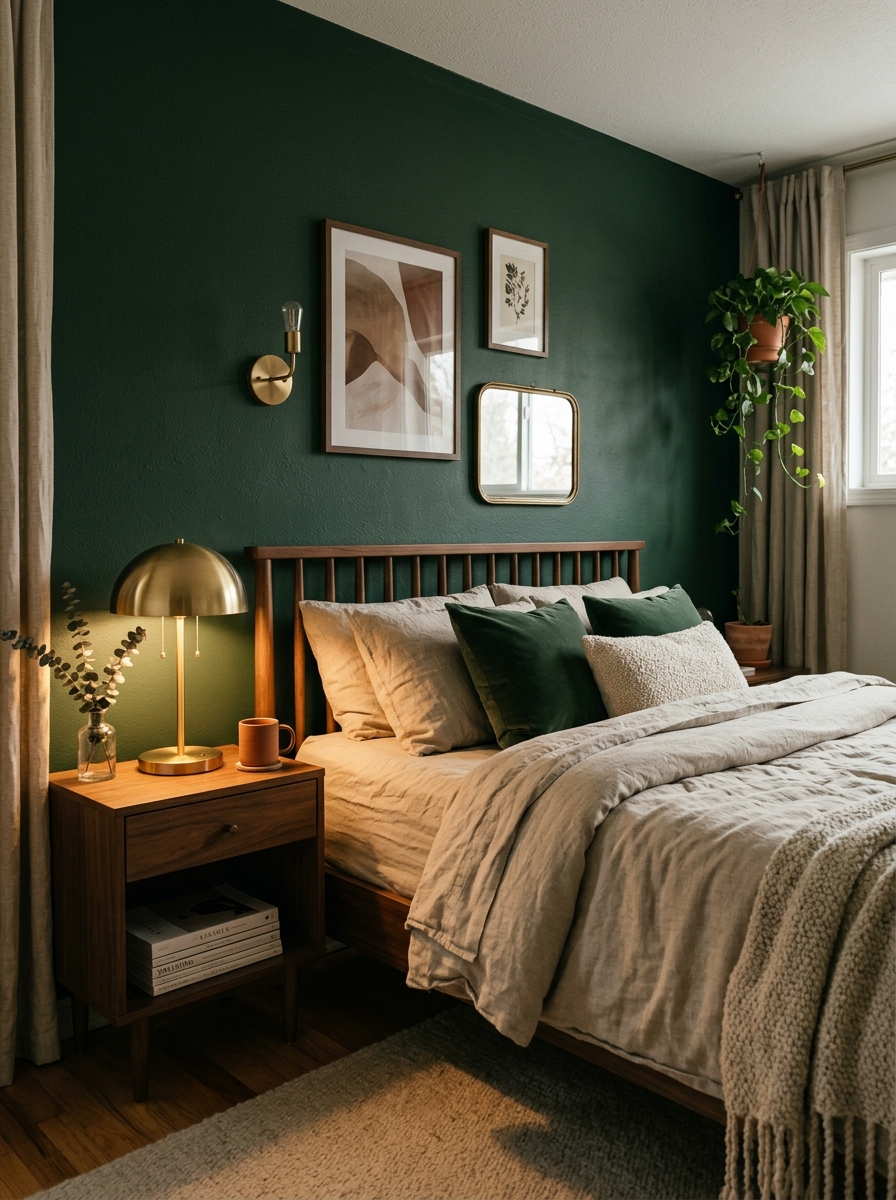
Accent walls: which wall, which color
Most accent walls fail because of the wall, not the color. Here is how to pick both, and how to check the result before you paint.
-
 Choosing color
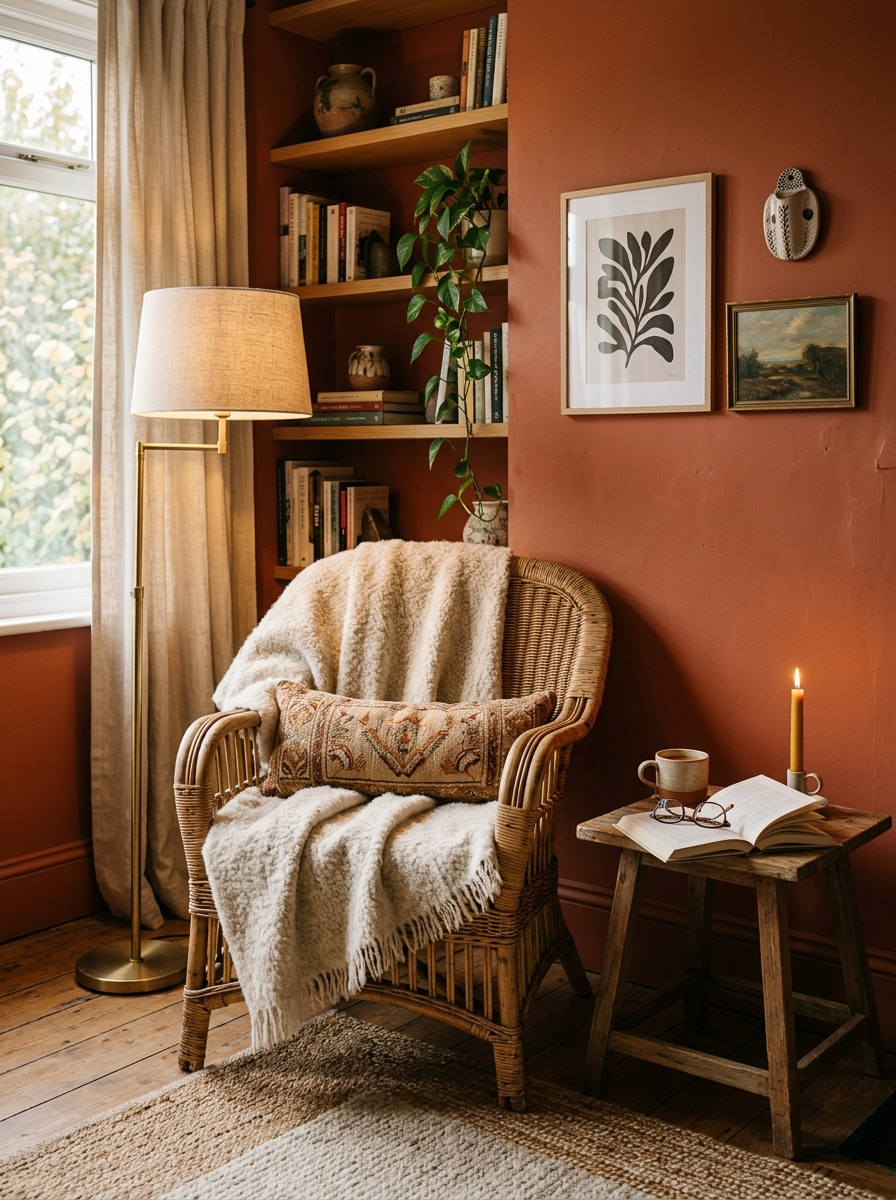
How to color drench a room
One color on walls, trim, doors and ceiling. Here is where color drenching works, where it fails, and how to see it before you commit.
-
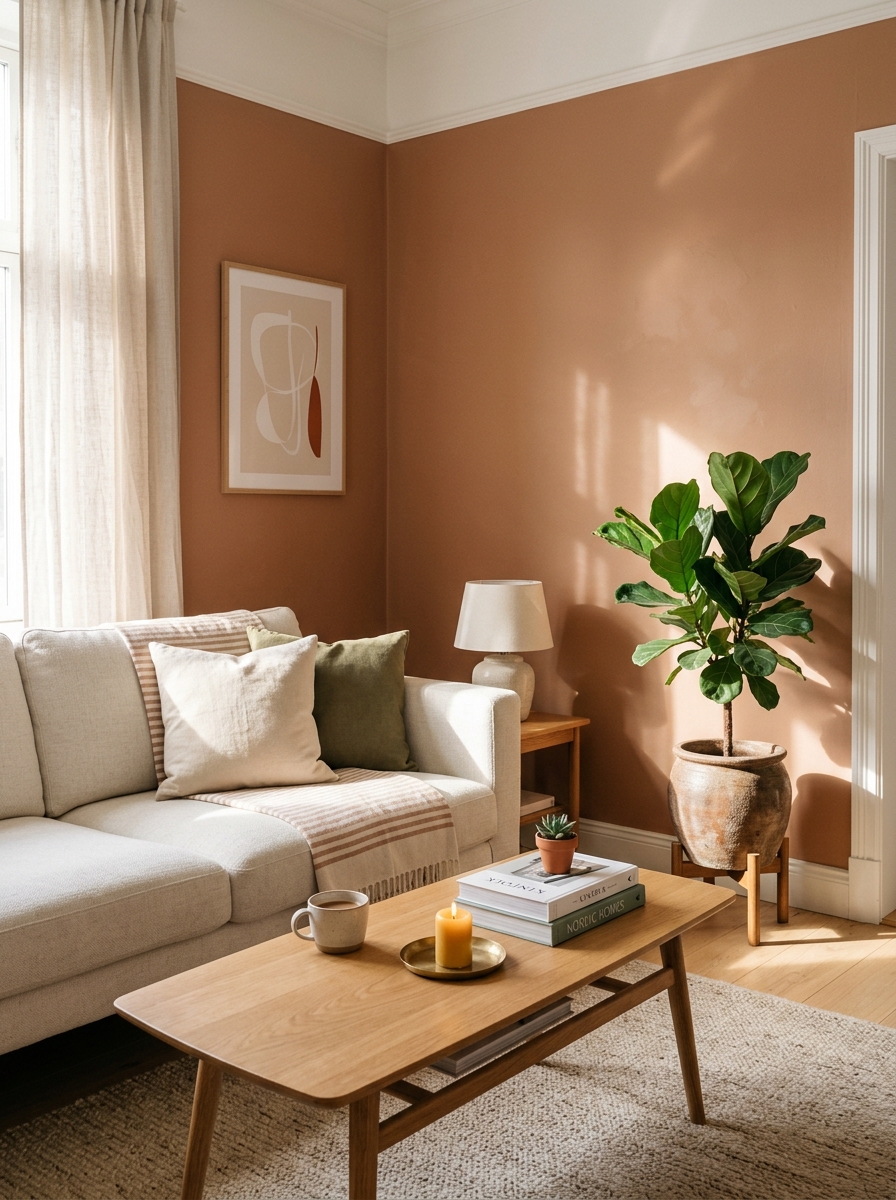 Choosing color
Wall colors that go with your floor
You can repaint a wall in a day. You cannot repaint the floor. Here is how to pick wall colors that work with wood, oak and gray floors.
-
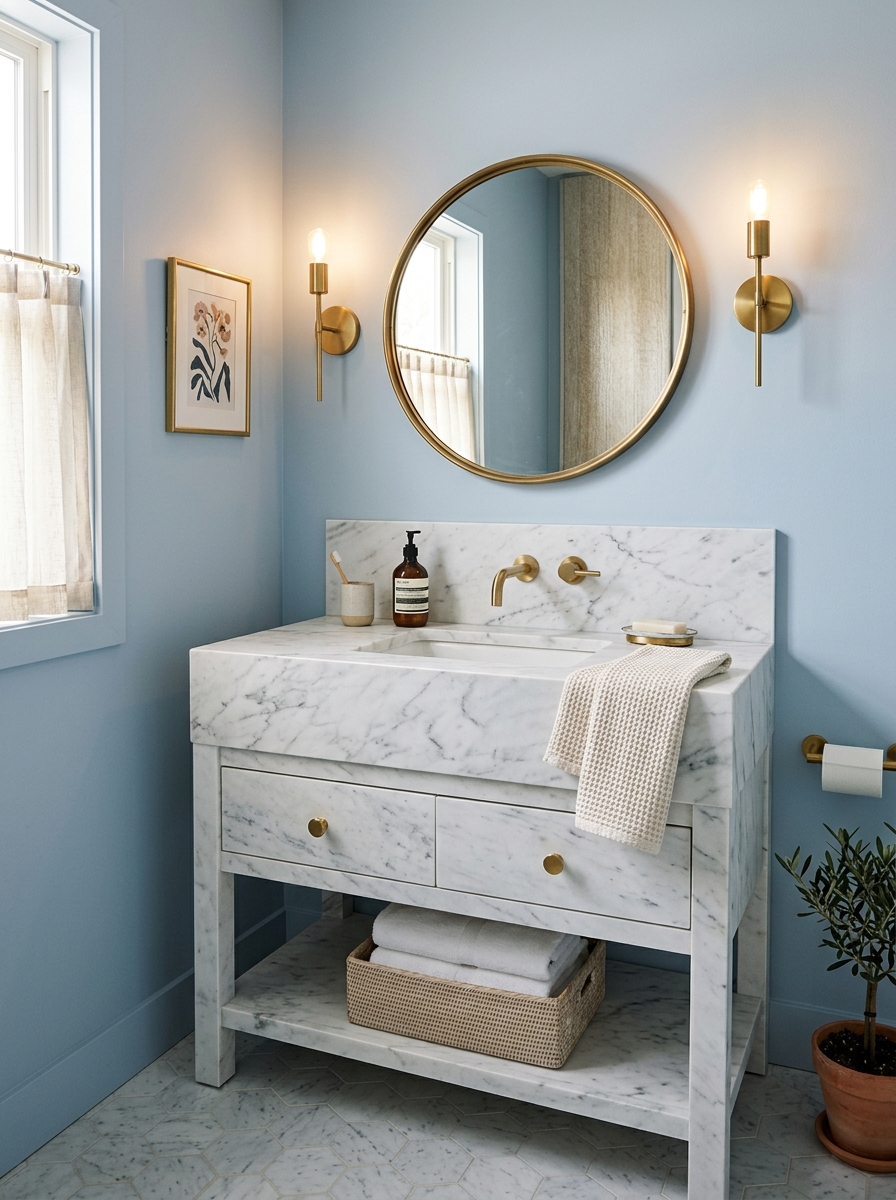 Choosing color
Paint colors for a small bathroom
Small bathrooms have little wall, lots of tile and usually bad light. Here is how to pick a color and finish that work with all three.
-
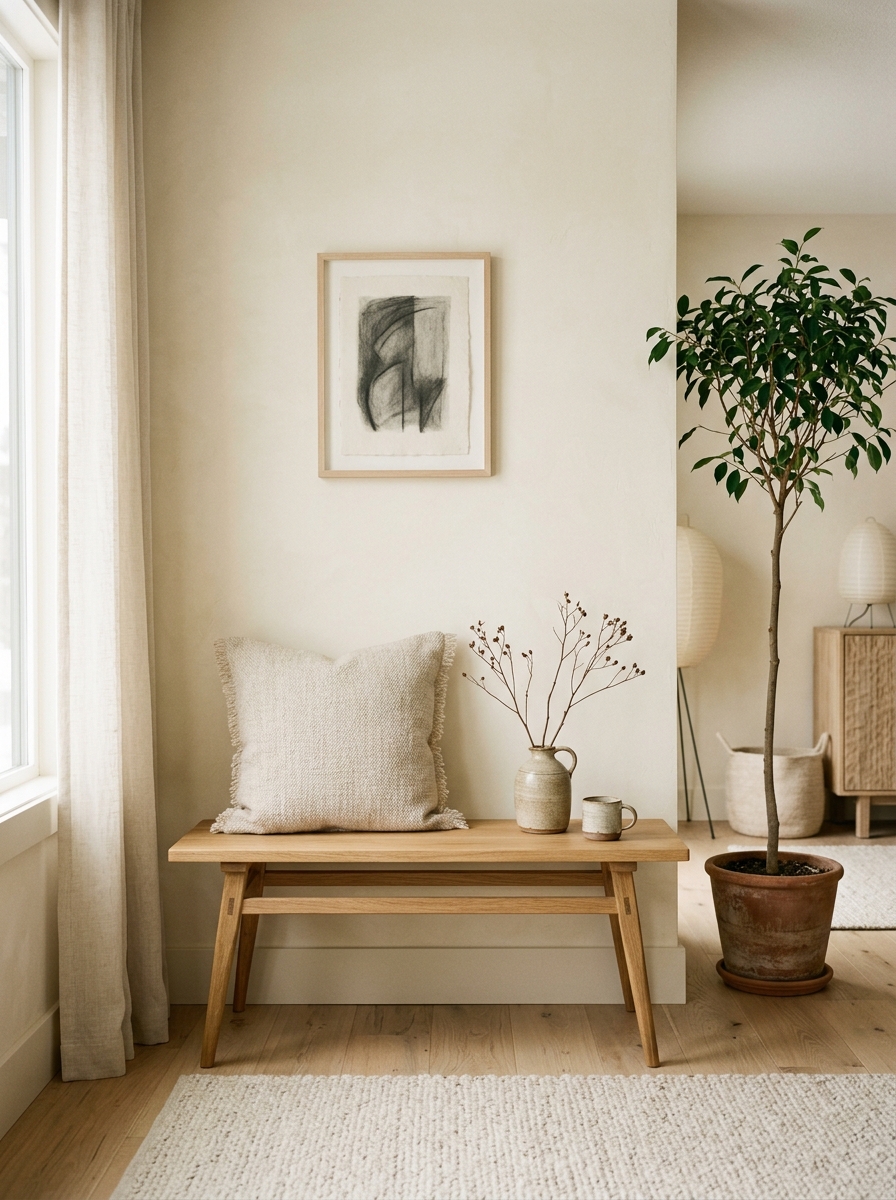 Choosing color
Warm white, without the yellow
Every warm white looks fine on the chip. Here is why some turn yellow on the wall, and how to pick one that stays soft.
-
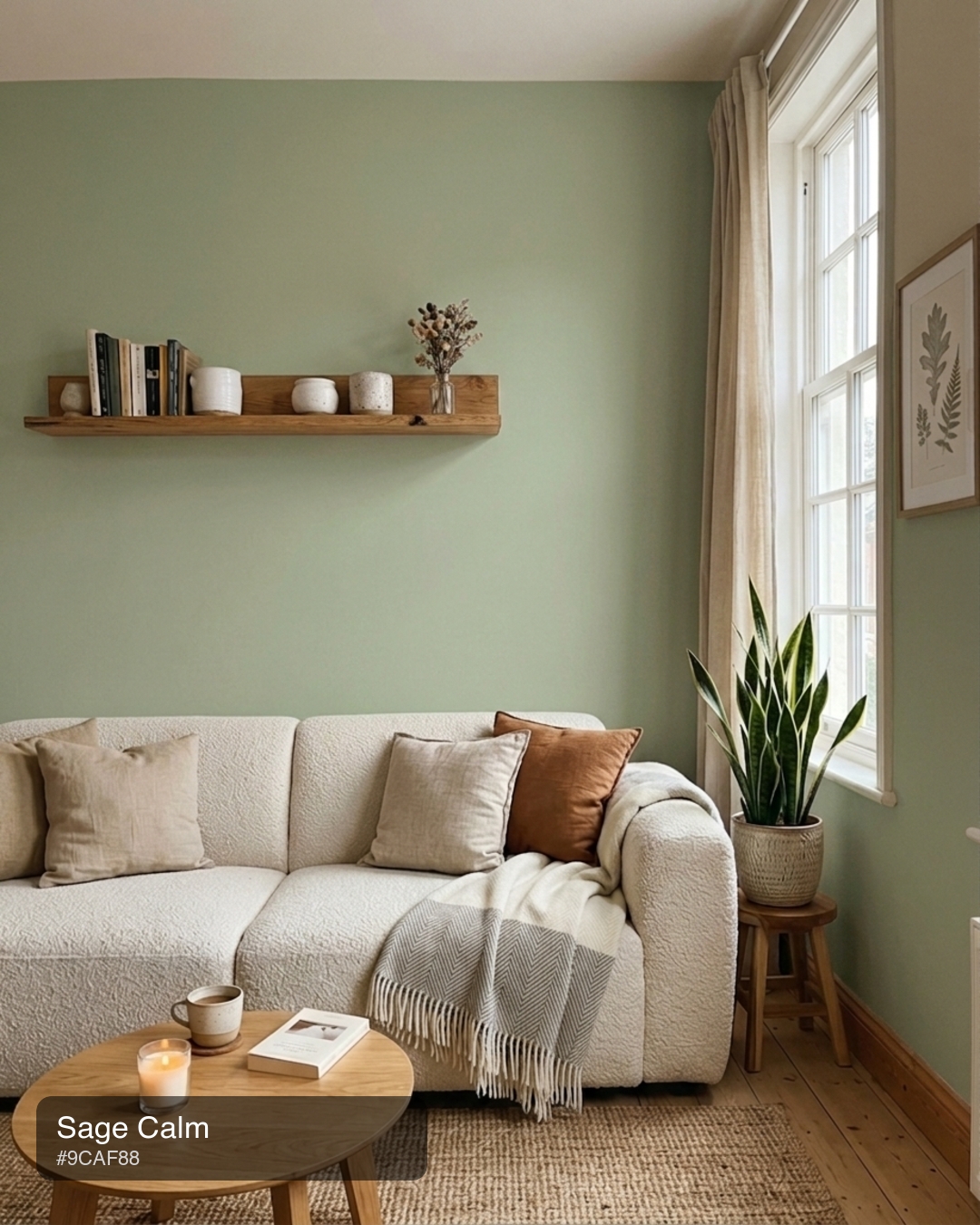 Choosing color
How to pick your sage
Five sage greens look identical on the chip and completely different on your wall. Here is how to narrow them to one without wasting tester pots.
-
 Choosing color
How to choose a paint color for any room
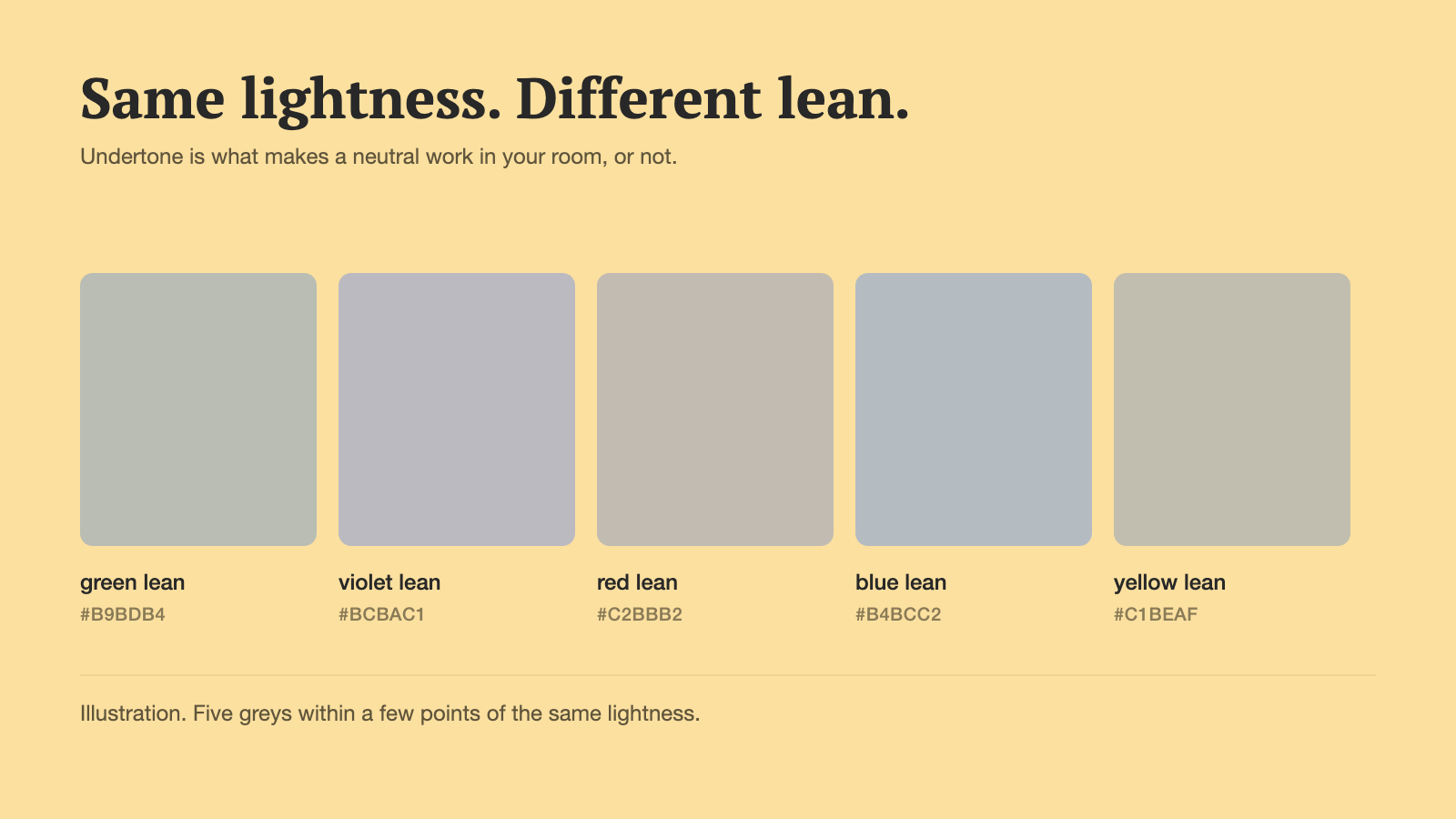
Four decisions in order: which way the room faces, what the floor forces on you, undertone, then a test in the room's own light. Start at the room, not the swatch.
-
 Choosing color
What actually makes a small room look bigger
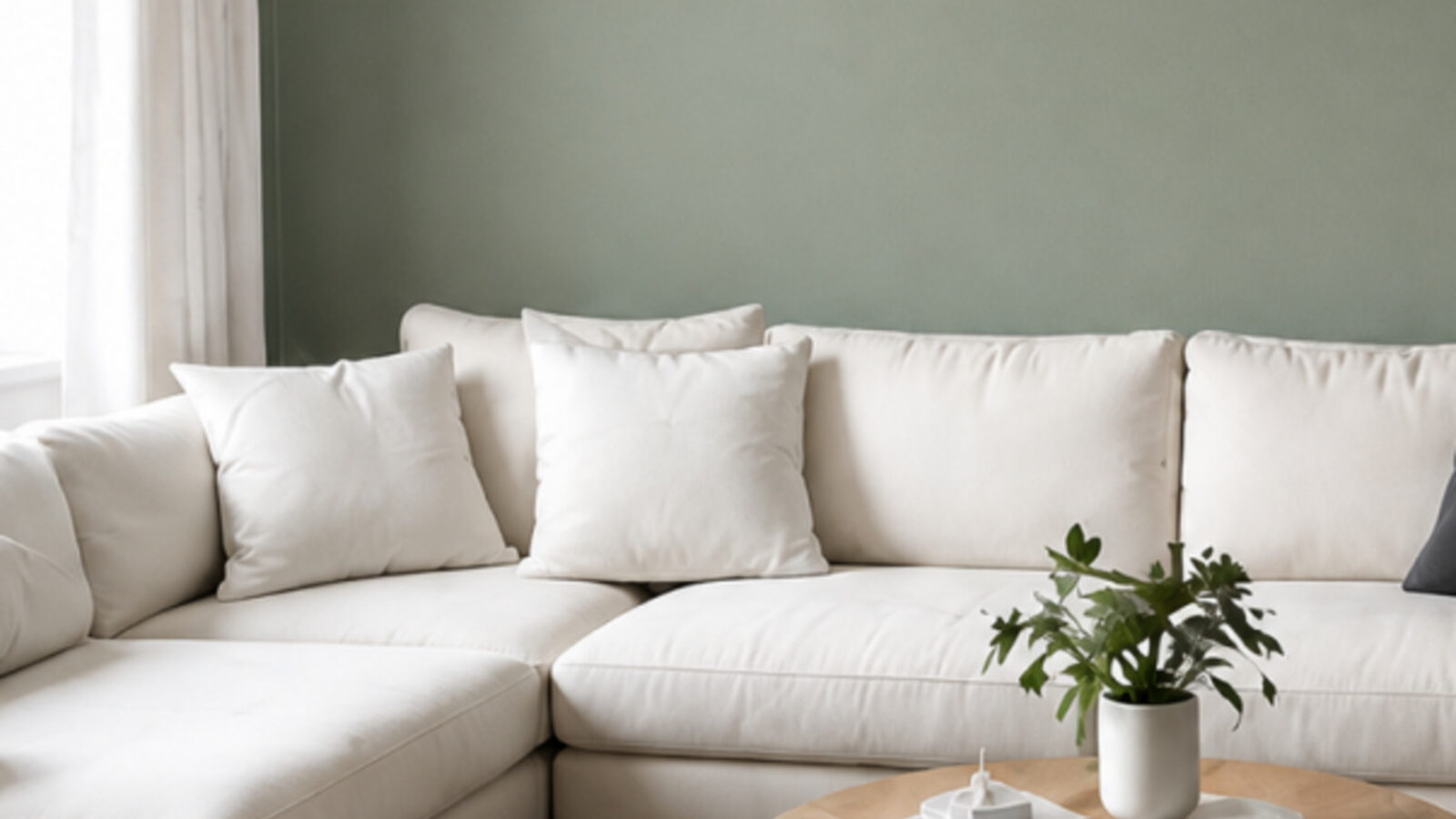
Light paint alone does not do it. Small rooms read as bigger when walls, trim and ceiling sit close in tone, so the eye has fewer edges to measure by.
-
 Choosing color
What to paint a north-facing room
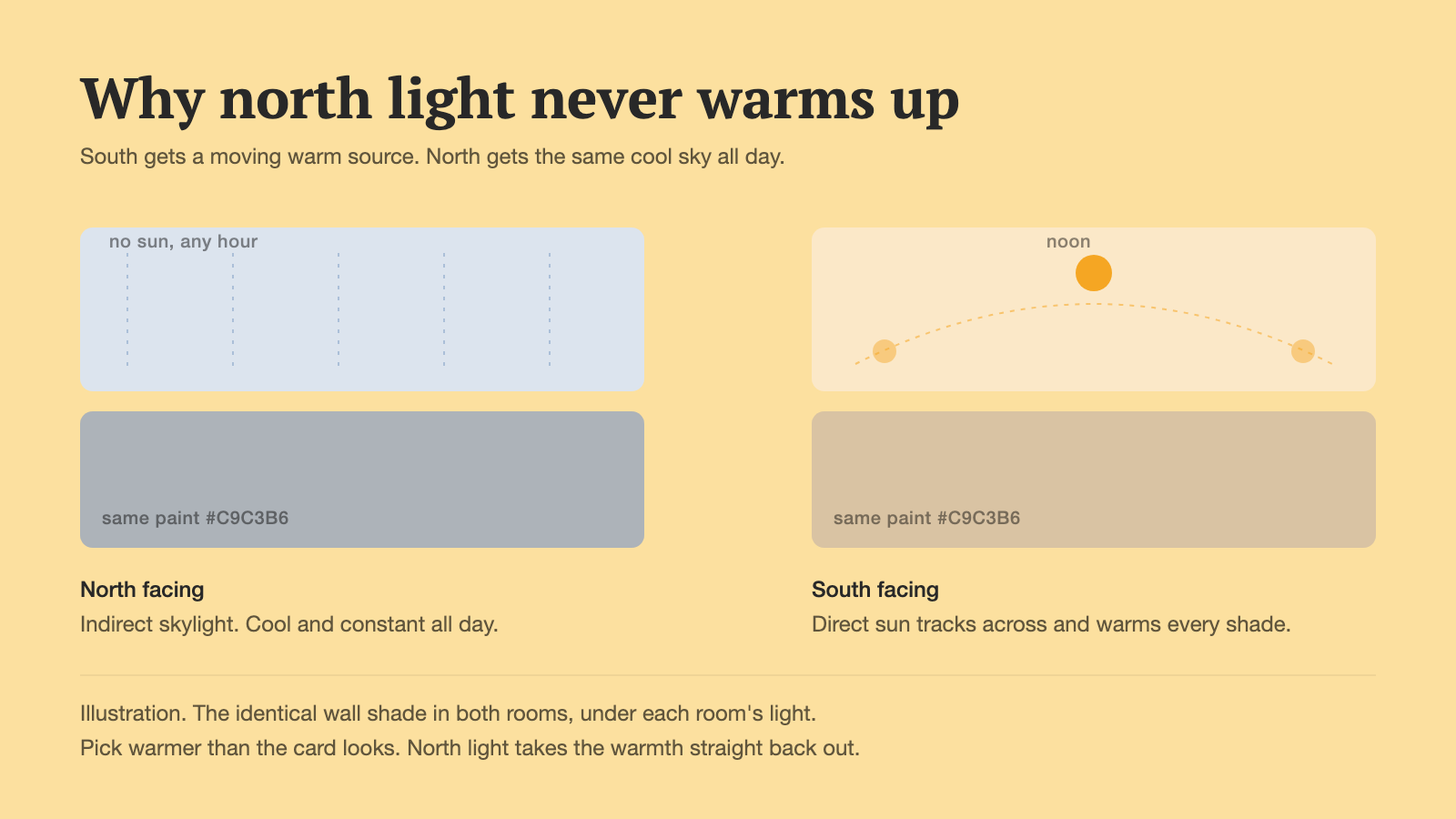
North light is cool and even, so it drags color toward grey. Warm undertones hold up, and going deeper often beats going paler.
-
 How to
 test a paint color before you buy
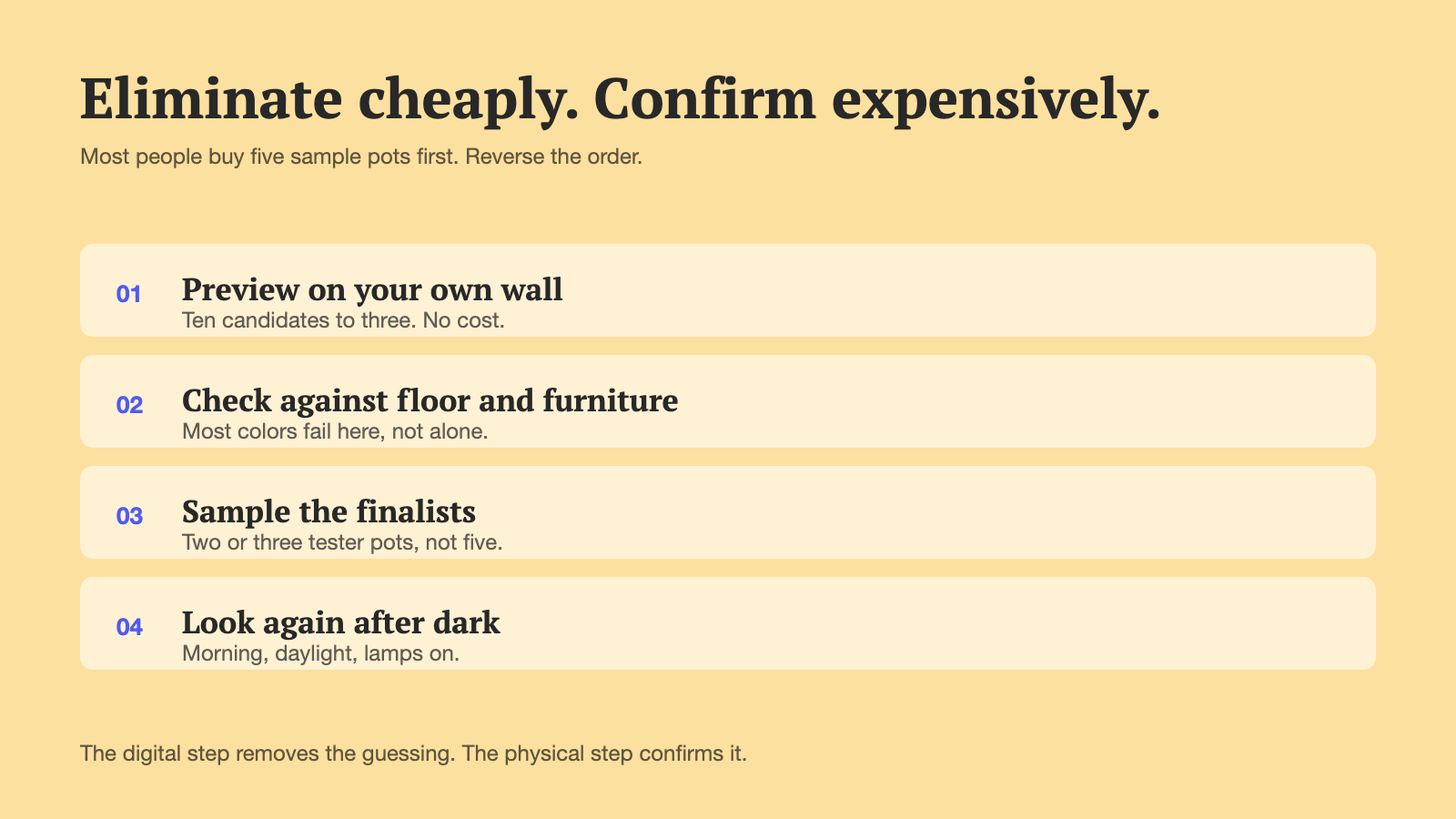
Judging a color in the shop is the mistake. Preview on your own wall, narrow to two or three shades, then sample only those and check them morning and evening.
-
 Choosing color
Bedroom colors, and what they actually do
Saturation and contrast do more than hue. Muted, low-contrast shades calm a bedroom, and evening bulb behaviour matters more than how it looks at noon.
-
 Choosing color
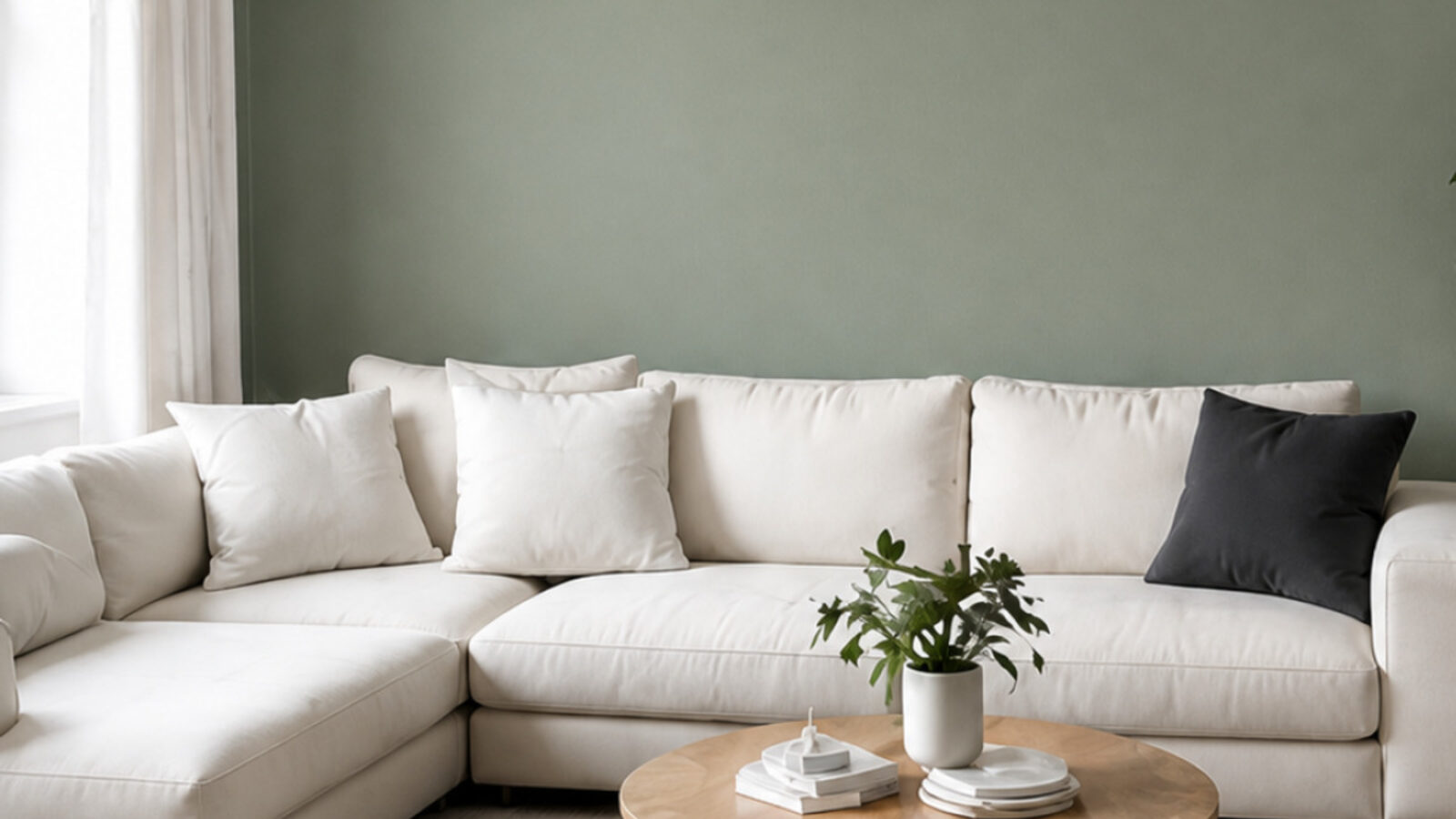
Sage green, without it looking dated
Sage dates when you use it as an accent wall. Treat it as a neutral, wrap the room, match the undertone to your light, and anchor it with warmth.
-
 Choosing color
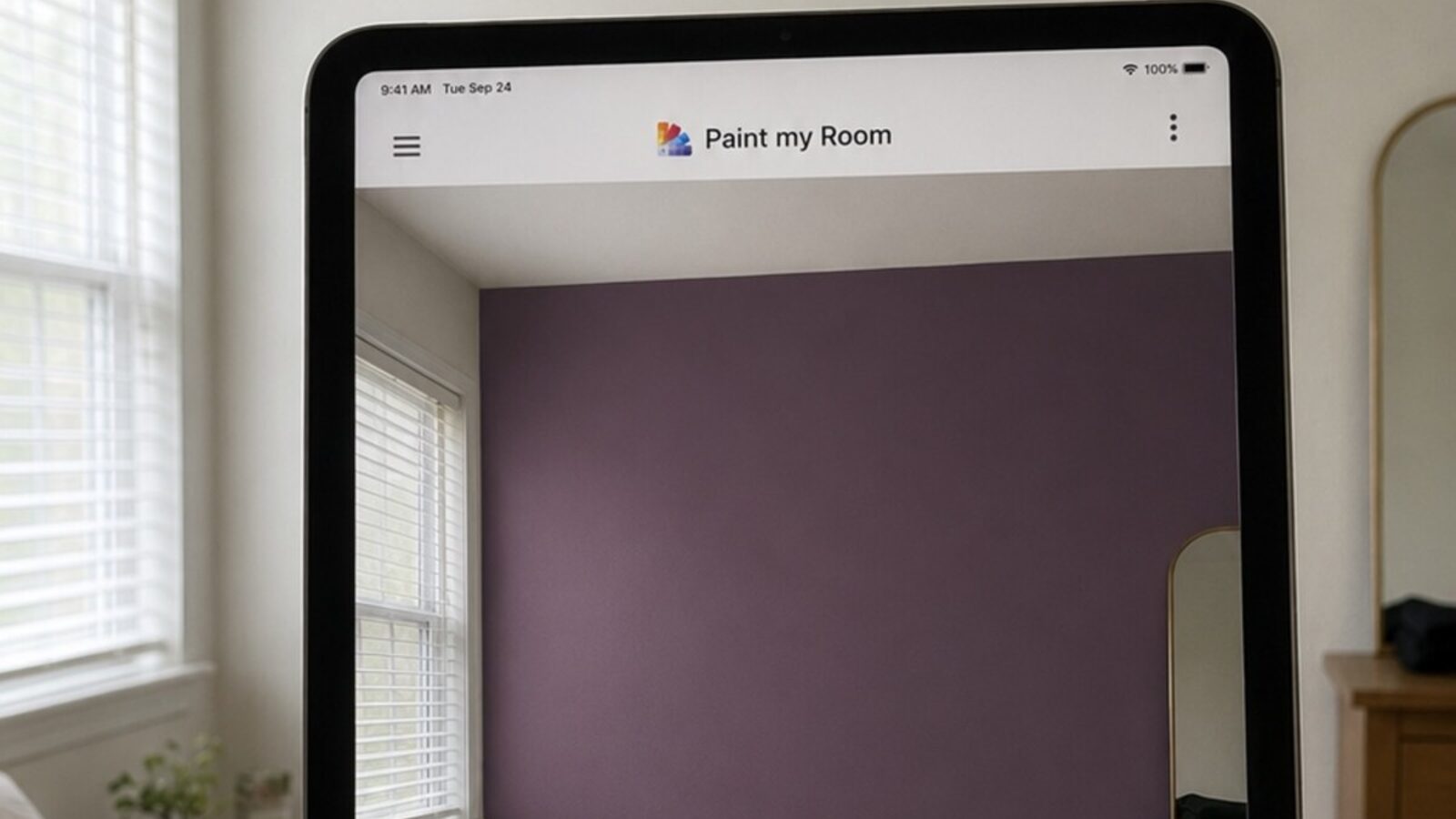
Renting? Test the color before you commit
A no-painting clause does not stop you choosing. Preview shades on your real walls now, so when permission arrives the decision is already made.

See the color on your walls first
Paint my Room paints a photo of your own room in any color, with its light and shadow kept. Free to download on iPhone, iPad and Android.