- Paint my Room
- Guides
- Choosing color
How to pick your sage
Five sages on one wall become five different rooms in real light. Preview them where they will live, match the undertone to your light, and let your furniture pick the winner before you buy a single tester.
 Erik, Chief Colour Officer · 3 min read
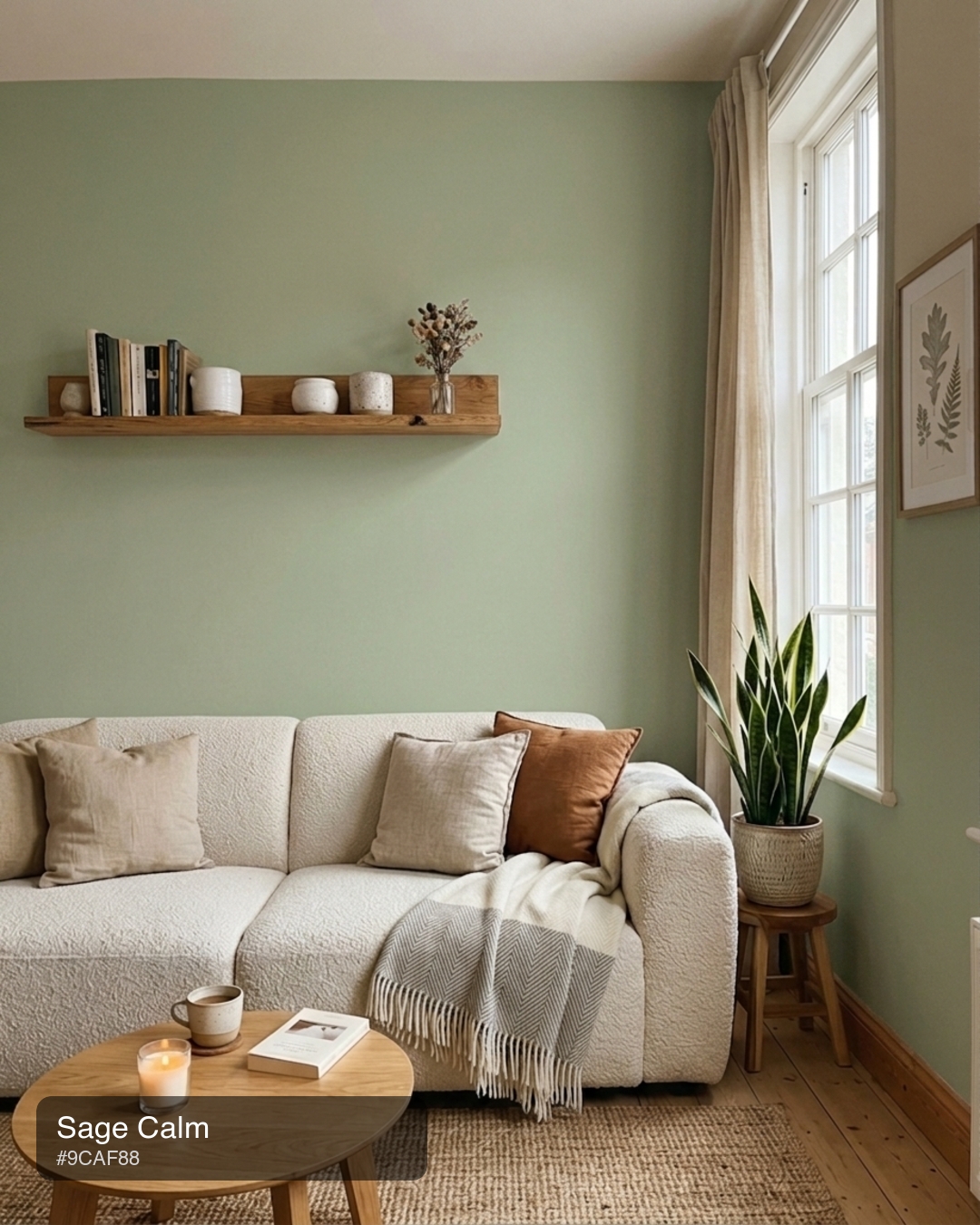
Sage green is not one colour. It is a family that runs from soft grey-green to warm olive, and the shades sit so close together on a fan deck that choosing feels impossible. Five of them will look like near-identical squares in your hand. That is exactly why people freeze, and why so many living rooms end up painted a sage that looked perfect in the shop and flat on the wall.
The fix is not more squares. It is seeing each shade at full size, in your room, in your light, before a single tin is opened.
Why five sages become five different rooms
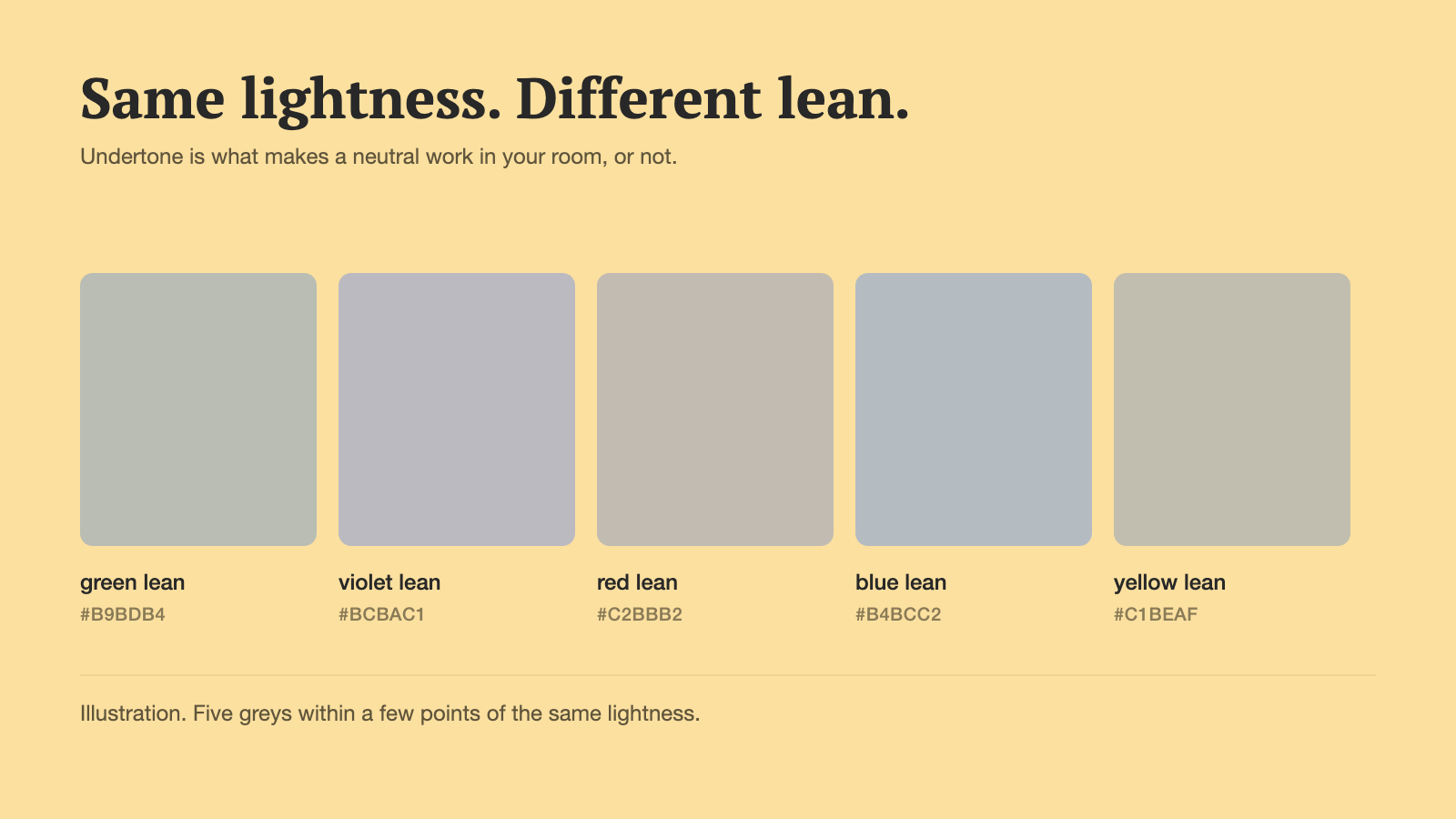
A paint chip is a few square centimetres under shop lighting. A wall is dozens of square metres under your windows. Scale amplifies undertone: the faint grey in one sage disappears on the chip and takes over the wall, while the faint yellow in another reads as fresh up close and murky across a whole surface.
This is why a shade you loved in the store can feel like a mistake at home. Nothing changed except size and light, and those two things are the whole colour.
Preview each shade where it will actually live
Before you drive to buy testers, put every candidate on a photo of your own wall. Previewing the shades digitally, in the exact room, turns an abstract fan deck into a real decision in minutes. You will eliminate three of the five almost immediately, because on the real wall the losers are obvious in a way they never are in your hand.
Paint my Room does this from a single photo, so you can compare all five sages side by side on your wall and only spend money on the ones that survive.
Match the undertone to your light
Once you are down to a shortlist, light decides the rest.
- North-facing rooms get cool, flat light all day. A warm, yellow-leaning sage adds the warmth the room is missing. A cool sage here can look grey and cold.
- South-facing rooms get bright, warm light. A cool, grey-leaning sage stays crisp, while a warm sage can tip into olive by mid afternoon.
- East and west rooms swing across the day, so check any finalist in both morning and evening light before deciding.
The same sage is a different colour in each of these rooms. Choose for your light, not for the photo on someone else's feed.
Let the furniture cast the deciding vote
A wall colour never lives alone. The winning sage is the one that agrees with what is already in the room: the undertone of your sofa, the warmth of your wood, the cream or grey of your textiles.
Hold each finalist against your largest pieces. Warm oak and cream fabrics pull you toward a warmer sage. Cooler greys and blacks sit better with a grey-green. When the wall and the furniture share an undertone, the room reads as calm and considered. When they fight, no shade of sage will fix it.
Narrow five to two, then buy
By now the process is simple. Preview all five on your wall, cut to the two that survive your light and your furniture, and only then buy those two as tester pots. Paint a generous patch of each, live with them for a day, and check both morning and evening. The colour that still looks right in both is the one to commit to.
Five pots and guesswork is how sage goes wrong. Two pots and a preview is how it goes right.
Questions people ask
How many sage greens should I test at once?
Preview as many as you like digitally, then narrow to two physical tester pots. Painting five real patches is expensive and makes the decision harder, not easier.
Why does the same sage look different in my room than in the store?
Scale and light. A chip is tiny and lit by shop bulbs; your wall is large and lit by your windows. Both amplify the undertone, so the shade shifts noticeably at home.
What is the safest sage for a north-facing room?
A warm, slightly yellow-leaning sage, because cool north light needs warmth in the colour to avoid looking grey and flat.
Can I choose a sage without buying any tester pots?
You can shortlist confidently by previewing shades on a photo of your wall, but for the final decision a physical tester checked in your own light is still worth it.
Sources
- Sage greenon the range of green shades and their names.
- Color temperatureon how warm and cool light changes how a colour reads.
See the color on your walls first
Paint my Room paints a photo of your own room in any color, with its light and shadow kept. Free to download on iPhone, iPad and Android.