- Paint my Room
- Guides
- Choosing color
How to color drench a room
Color drenching is one color on every surface, walls, trim, doors and ceiling. It makes small rooms feel deliberate instead of cramped, but you only see the effect when everything changes at once, so preview the whole room before you paint any of it.
 Erik, Chief Colour Officer · 2 min read
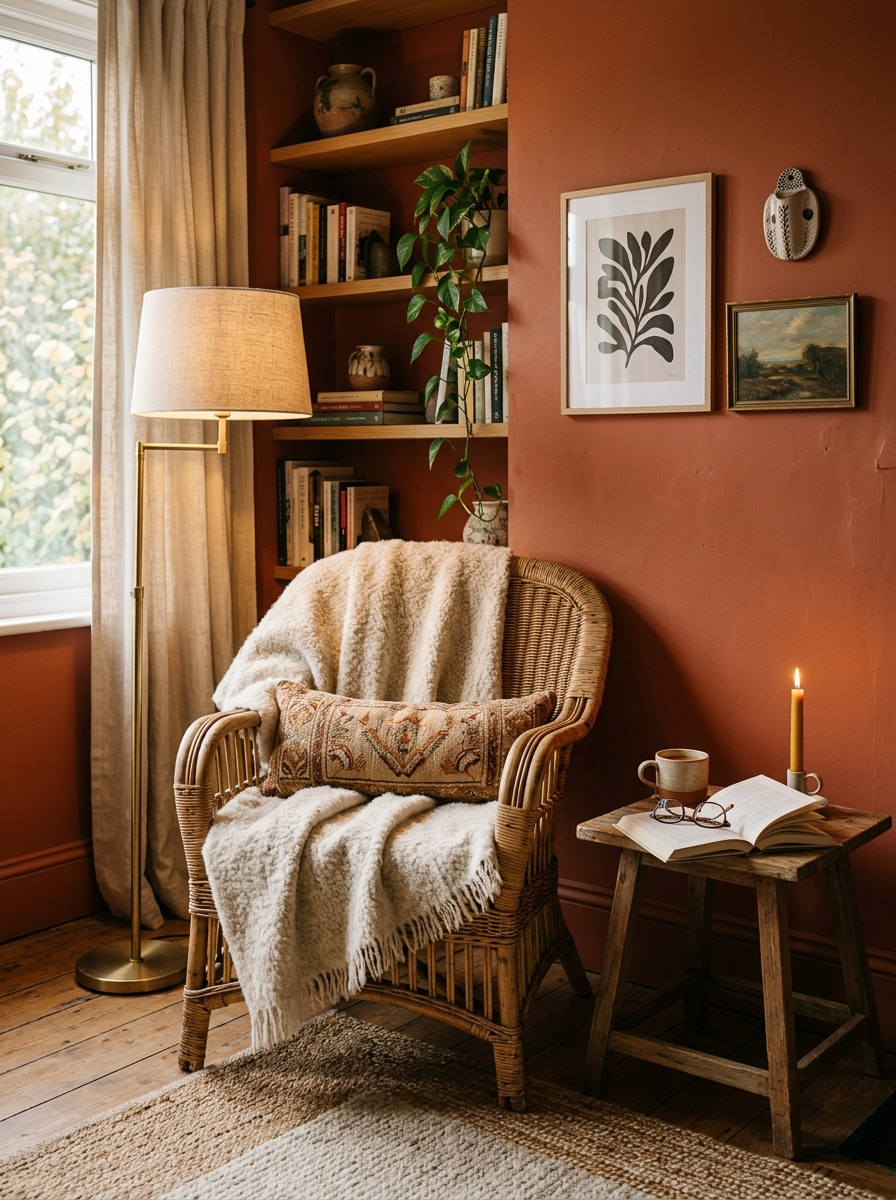
Most rooms are painted in two colors without anyone deciding it: a color on the walls and white on everything else. Color drenching drops the white. The room becomes one continuous surface, and that changes how it feels far more than the color choice alone.
What color drenching actually is
A drenched room carries one color across every painted surface. Walls, ceiling, skirting boards, door frames, doors, window frames, even radiators and built-in shelves. Some people use one exact shade everywhere. Others step it slightly, the walls in the main color and the ceiling a touch lighter, so the top of the room does not feel heavy.
The point is the same either way. There is no white frame around the color, so the color stops being a wall treatment and becomes the room.
Why it makes small rooms feel bigger, not smaller
White trim against a colored wall draws a line around every edge: the floor, the ceiling, the door, the window. In a small room those lines are close together, and the eye keeps bumping into them. That is what makes a space feel boxed in.
Drenching removes those lines. Corners soften, the ceiling stops capping the walls, and the room reads as one shape. Hallways, bathrooms, home offices and box rooms are where this pays off most, because they have the most edges per square metre.
Which colors drench well
Drenching rewards colors with some depth. Terracotta and clay feel warm and enclosing. Olive and deep green feel grounded. Navy and inky blue feel quiet. Plum and aubergine feel dramatic in a study or dining room.
Very pale colors are harder. A full drench in a light cream or pale grey often just looks like the trim was never painted. If you love light colors, drench in a mid tone of that family instead of the palest chip on the card.
Finish matters as much as color
One color does not mean one finish. Walls usually look best in a matt or eggshell finish. Skirting, doors and frames take more knocks, so a satin finish holds up better there. The small change in sheen catches light differently, which gives the room depth while the color stays continuous.
Ceilings are almost always best in a flat finish, so they do not reflect glare.
Preview the drench before you commit
Drenching is a big change to undo. Every surface needs repainting if it goes wrong, so this is the one paint job where a single test patch tells you almost nothing. The patch shows you a color. It does not show you the room without its white edges.
Photograph the room and preview the color across walls and trim together. Paint my Room lets you try a shade on your own walls from one photo, so you can see the full drench, check it against your floor and furniture, and only then buy paint.
Questions people ask
Should I paint the ceiling when color drenching?
Usually yes, because a white ceiling brings back the hard edge drenching is meant to remove. If the room is low or dark, use the same color mixed lighter, or a paler shade from the same family, so the ceiling stays connected but does not feel heavy.
Does color drenching work in a dark room?
Yes, and often better than a pale color. A dark room never gets bright enough to make a light color glow, so it tends to look grey and flat. A mid or deep drench embraces the low light and makes the room feel cosy and intentional instead.
What finish should I use for color drenching?
Use matt or eggshell on the walls, satin on skirting, doors and frames, and flat on the ceiling. The color stays the same everywhere, and the slight difference in sheen adds depth while making the high-contact surfaces easier to wipe clean.
Is color drenching a passing trend?
The name is recent, but painting a room in one color has a long history in period homes. It lasts because it solves a real problem, the visual clutter of many edges in small rooms, rather than relying on a particular fashionable shade.
Sources
- Light reflectance valueon how much light a paint color reflects, which explains why deep drenches feel enclosing.
- Color temperatureon how the light in a room shifts the way a color reads.
See the color on your walls first
Paint my Room paints a photo of your own room in any color, with its light and shadow kept. Free to download on iPhone, iPad and Android.