- Paint my Room
- Guides
- Choosing color
What to paint a north-facing room
North light is cool, even and unforgiving. It pulls colors toward grey, so pick warmer than the card suggests, and consider going deeper rather than paler, because pale shades are the ones that fall flat.
 Erik, Chief Colour Officer · 2 min read
A north-facing room is the one people most often repaint twice. The logic seems obvious: the room is dim, so paint it white and it will feel brighter. Then the white arrives and looks vaguely grey, slightly cold, and somehow duller than the room was before.
The light is why.
What north light actually does
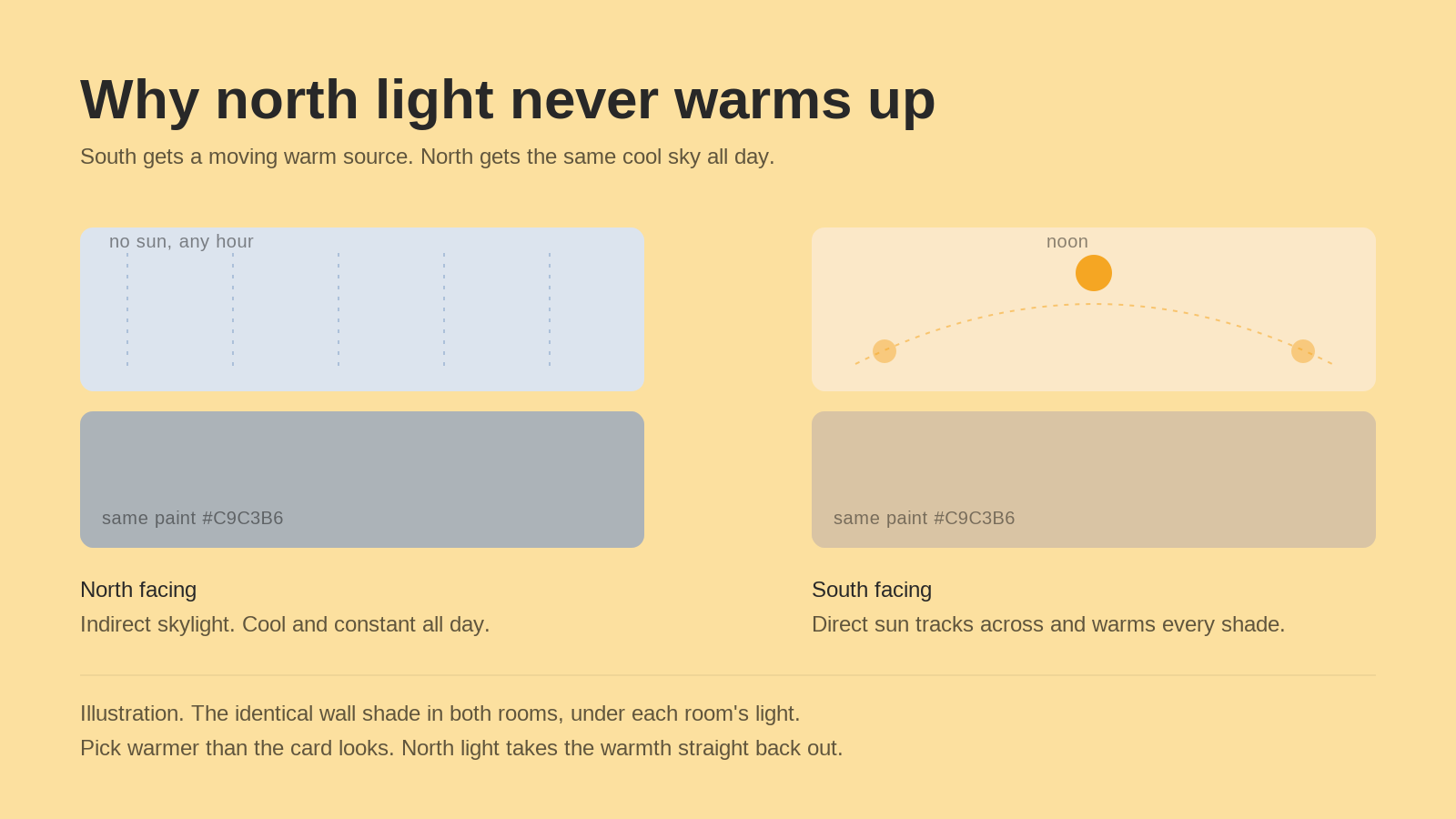
North-facing windows never receive direct sunlight. What comes in is indirect skylight, which is cool in color temperature and remarkably consistent from morning to evening. There is no warm afternoon flood to rescue a color later in the day.
Cool light emphasises cool components in a pigment and suppresses warm ones. So a grey with a blue or violet undertone gets colder. A brilliant white loses its crispness and reads as pale grey. Nothing is wrong with the paint, it is simply being lit by the one light that flatters it least.
Go warmer than the card looks
The correction is counter-intuitive: choose shades that look slightly too warm, even faintly yellow or pink, on the swatch in your hand. North light will remove that warmth for you, and the color will land where you wanted it.
Shades that tend to hold up:
- Warm off-whites with a yellow or red base rather than a blue one
- Soft clay, stone and putty tones, which have enough warmth in reserve to survive
- Greens with yellow in them, sage and olive rather than mint or eucalyptus
- Muted ochre and warm sand, which read as light without reading as cold
Shades that tend to disappoint: pure brilliant white, blue-based greys, mint and eucalyptus greens, anything described as "cool" or "crisp".
Consider going darker, not lighter
This is the move most people resist and most often thank themselves for.
Pale colors carry the least pigment, so they have the least resistance to a grey cast, which is why they flatten first. A deeper shade has enough colour to stay itself. And a north-facing room is never going to read as bright and airy no matter what you do, so making it read as warm and enveloping instead works with the light rather than against it.
Deep green, warm charcoal, or a saturated clay in a north-facing study or bedroom usually looks considered. The same room in flat white usually looks like a compromise.
Do not forget the bulbs
In a room where daylight is weak, artificial light does proportionally more of the work. Cool white bulbs at 4000K and above will compound the problem the whole way through the evening. Warm bulbs around 2700K put back the warmth the daylight took out, and cost almost nothing to change.
Check any candidate under your actual bulbs, not only in daylight. In a north-facing room that evening reading is the one you will live with most.
Test it in the room
North light is the hardest lighting to predict from a swatch, which makes previewing the shade on your own wall more valuable here than anywhere else in the house. Try the shortlist in place, then look at it in the morning and again with the lamps on.
Questions people ask
Why do white walls look grey in a north-facing room?
Because north-facing windows only receive indirect skylight, which is cool in colour temperature. Cool light suppresses the warm components in a pigment, so a brilliant white loses its crispness and reads as pale grey. A warm off-white with a yellow or red base resists this far better.
Should I paint a north-facing room white to make it brighter?
Usually not. A north-facing room will not read as bright whatever you paint it, and plain white is the shade most likely to look cold and flat in that light. A warm off-white brightens without going grey, and a deeper warm shade often looks better still.
Can a north-facing room take a dark color?
Yes, and it is often the better choice. Pale colours have the least pigment to resist the grey cast, so they flatten first. Deep green, warm charcoal or saturated clay keep their character and make the room feel deliberately enveloping instead of dim by accident.
What undertone works best in north light?
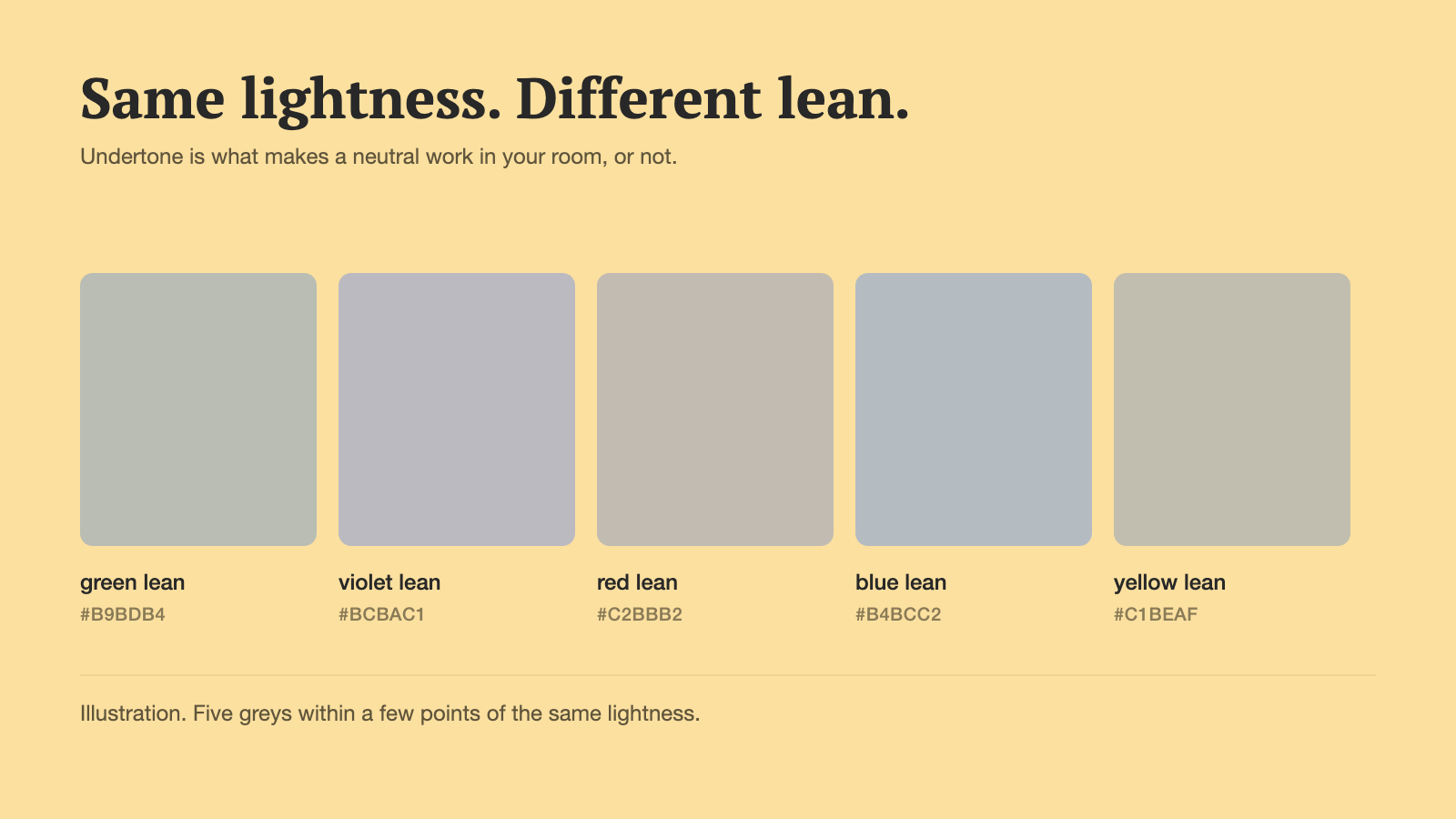
Warm: yellow, red or earth-based. These have warmth in reserve for the cool light to take away. Blue and violet undertones get colder and can look slightly dirty. If a shade looks faintly too warm on the card, it is probably right for the room.
Which light bulbs suit a north-facing room?
Warm white, around 2700K. Daylight is doing less of the work in a north-facing room, so bulbs matter more. Cool bulbs at 4000K or above extend the cool cast into the evening, while warm bulbs restore the warmth the daylight removed.
See the color on your walls first
Paint my Room paints a photo of your own room in any color, with its light and shadow kept. Free to download on iPhone, iPad and Android.