- Paint my Room
- Guides
- Choosing color
What actually makes a small room look bigger
Pale walls are only half the answer. A small room reads as bigger when the walls, trim and ceiling sit close together in tone, because the eye has fewer edges to measure the space by.
 Erik, Chief Colour Officer · 3 min read
Everyone gives the same advice: paint a small room white and it will feel bigger. Sometimes that works. Often it does not, and the room ends up feeling like a small room that happens to be white.
The reason is that your eye does not judge size from brightness. It judges size from edges. Every place where one tone stops and another begins is a measurement, and a small room full of measurements reads as exactly as small as it is.
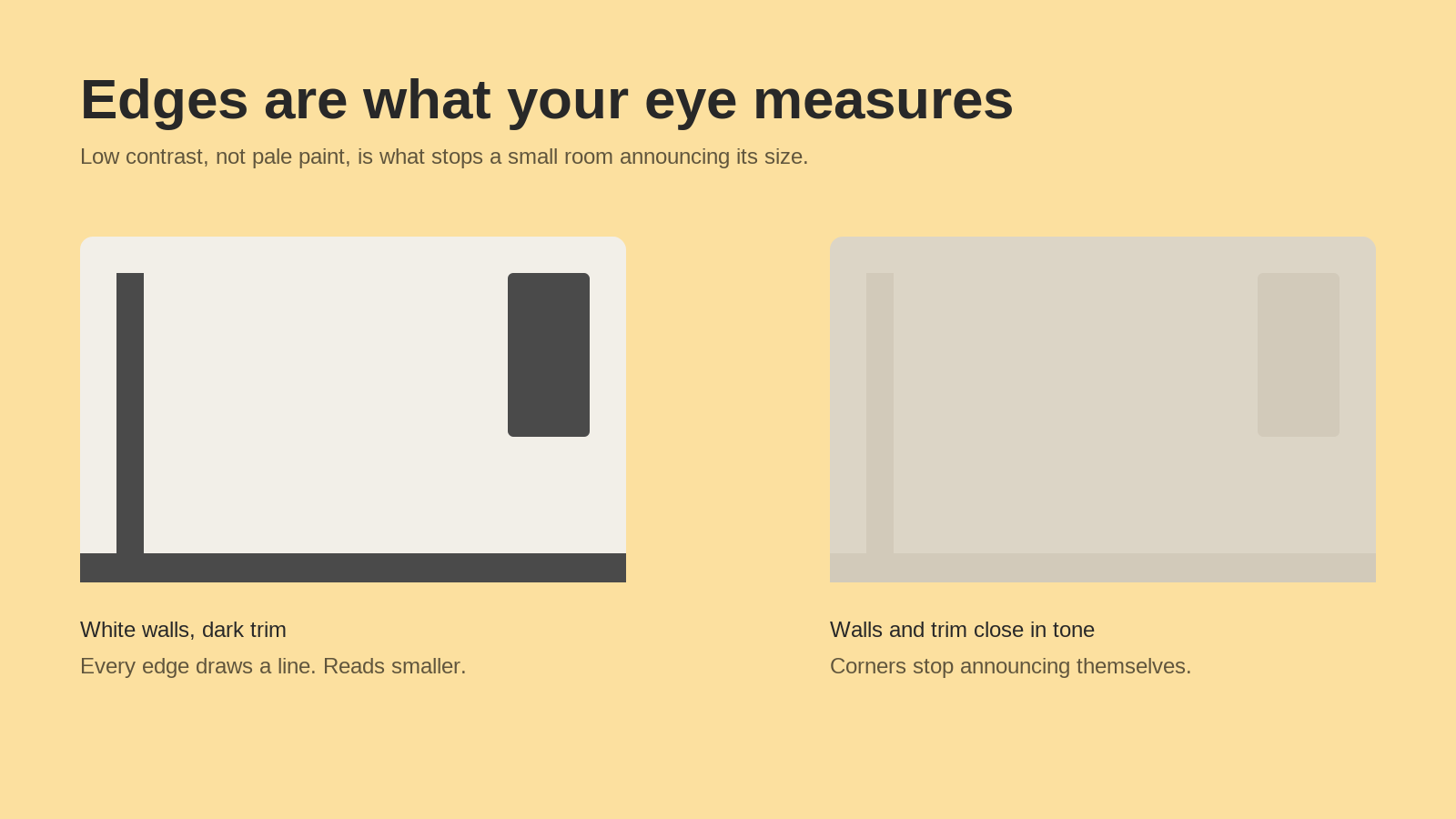
Why light paint alone does not work
Picture a box room with brilliant white walls, white ceiling, and the woodwork in a strong contrasting color. The skirting draws a hard line around the floor. The door frame draws a rectangle. The window reveal draws another. You can count the surfaces without trying, and counting is what makes it feel tight.
Now picture the same room where the trim is only a shade away from the wall. Nothing disappears, but the corners stop announcing themselves. The room does not get bigger. It stops telling you how small it is.
Keep walls, trim and ceiling close in tone
This is the single change with the biggest effect, and it costs nothing extra.
- Trim: the same color as the walls in a satin or eggshell finish. The sheen difference gives you definition without a tonal jump.
- Ceiling: the wall color mixed at roughly half strength, or a soft off-white that shares the wall's undertone. A cool white ceiling above a warm wall creates a hard horizontal line exactly where you do not want one.
- Doors: treat them as wall, not as furniture. A door painted to match the wall reads as surface. A door painted in contrast reads as an object taking up space.
Dark colors work, if you commit
The nervous version of a dark small room is the one that fails: a deep wall color, then white ceiling, white trim, white shelving. That is maximum contrast in a minimum space.
The version that works wraps everything. Walls, ceiling, trim, all in the same deep shade. The corners vanish, the boundaries become vague, and the room reads as intentional and enveloping rather than short of space. Small rooms that are already dark, like a windowless cloakroom or a north-facing study, are usually better served by leaning in than by fighting it with pale paint that turns grey anyway.
Undertone does more work than the name
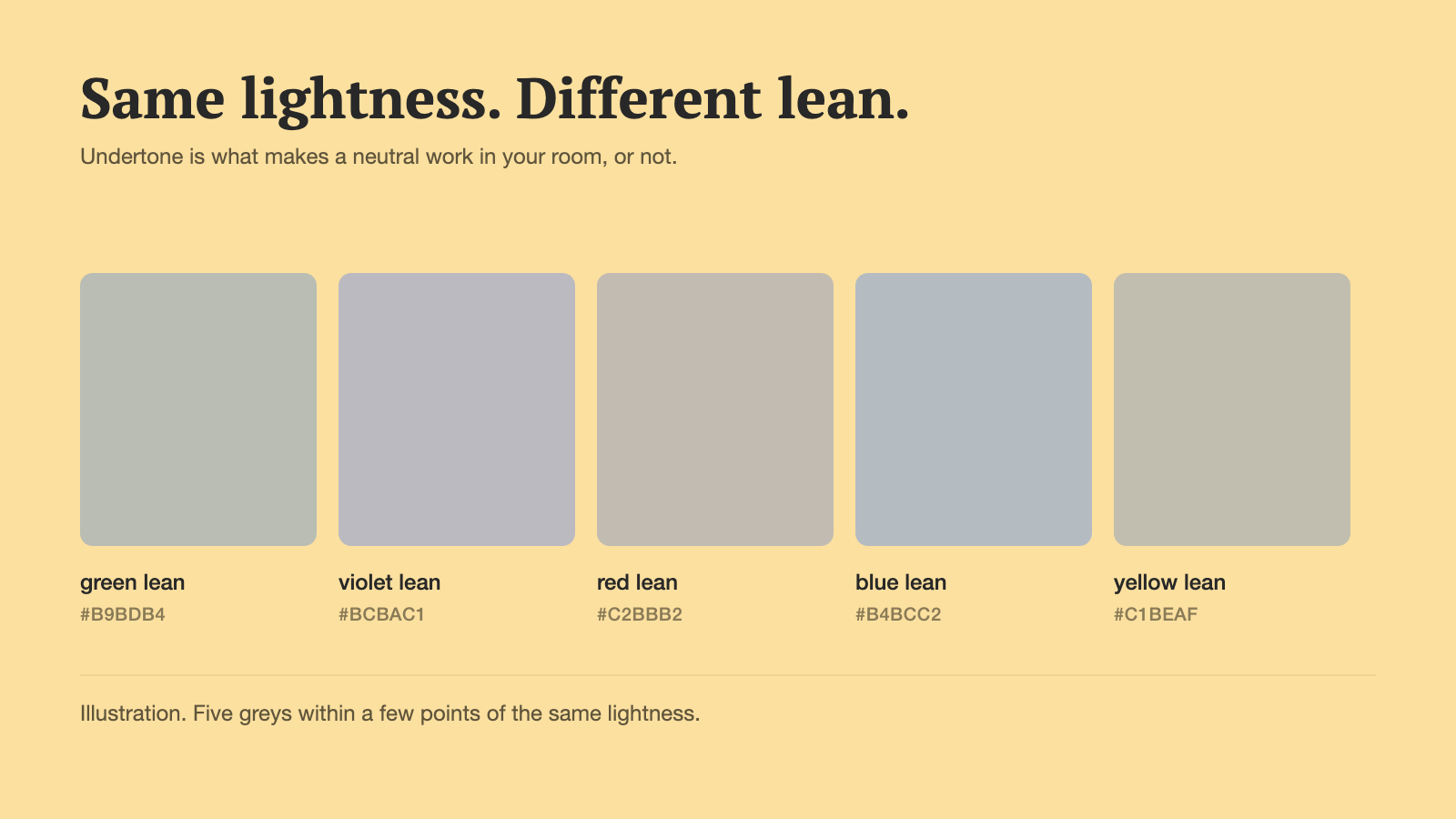
Two greys with the same lightness can behave completely differently. One with a green undertone will look muddy next to warm oak flooring. One with a violet undertone will turn cold under a north-facing window. Neither problem is visible on a swatch card in a bright shop.
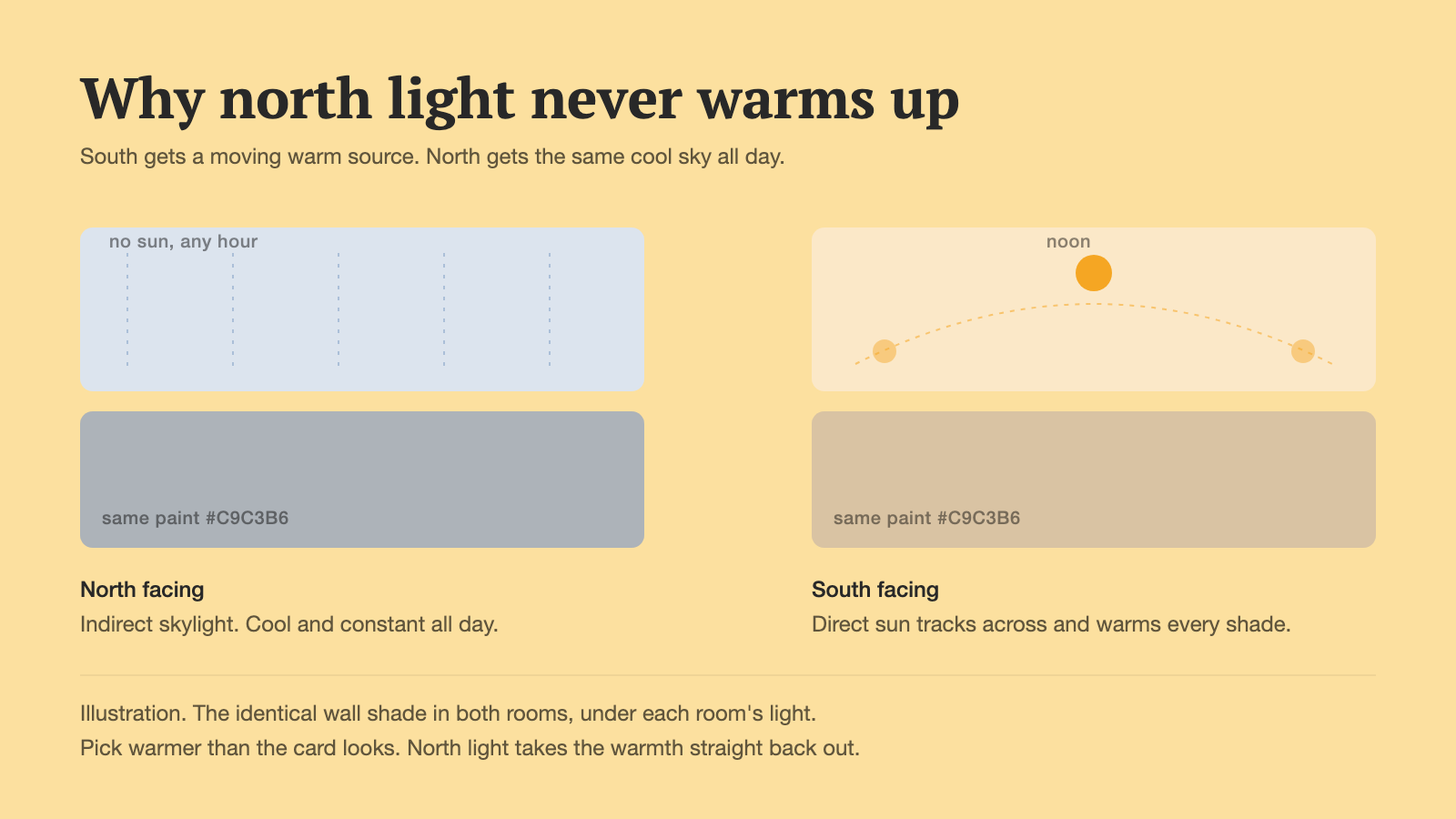
If the room faces north or east, or the window is small, shift warmer than feels right on the card. If the room gets strong afternoon sun, you can afford a cooler shade because the light will warm it for you.
Five shades that reliably work
The principle above matters more than any list, but if you want somewhere to start, these five are light enough to keep a room open and interesting enough not to read as a default.
- Soft white with a warm undertone. Bounces more light than any other colour without the clinical edge of a pure bright white. Best in north-facing rooms that never get much sun.
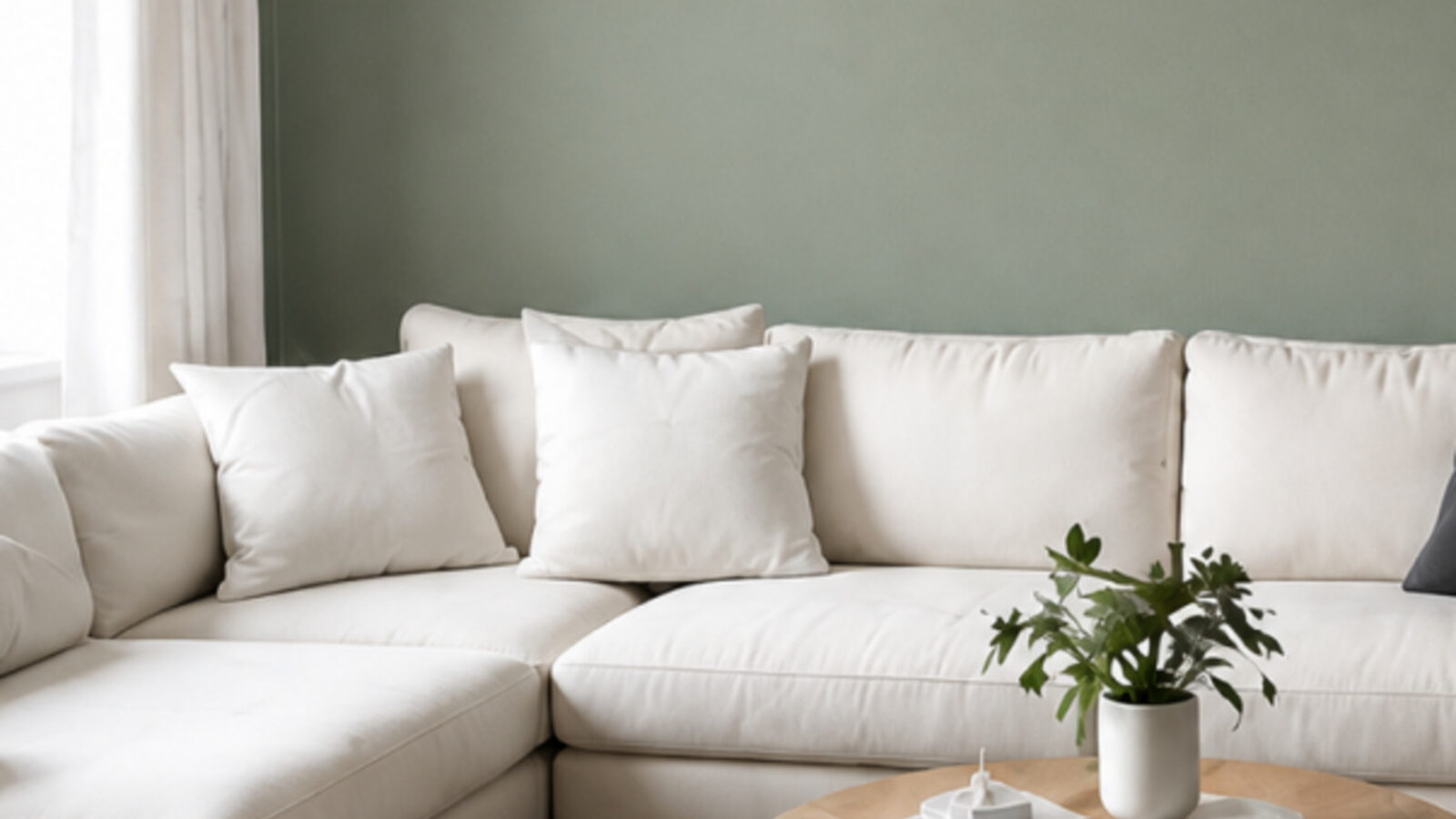
- Pale sage green. Light enough to keep the space feeling open, with more character than plain white. Sits well with wood and warm neutrals.
- Greige. The quiet workhorse: enough warmth to feel comfortable, enough grey to feel current, light enough that it never closes a room in.
- Powder blue. A soft, dusty blue reads as depth, almost a slice of sky, which suits a small bedroom or bathroom.
- Blush, barely there. At low saturation it behaves like a warm neutral, adds a faint glow, and reflects nearly as much light as white.
What every one of them has in common is the actual rule: low saturation, high lightness. A light version of almost any colour will open a room. A dark version of the same colour will close it, unless you commit and wrap everything, as above.
Test it where it is going
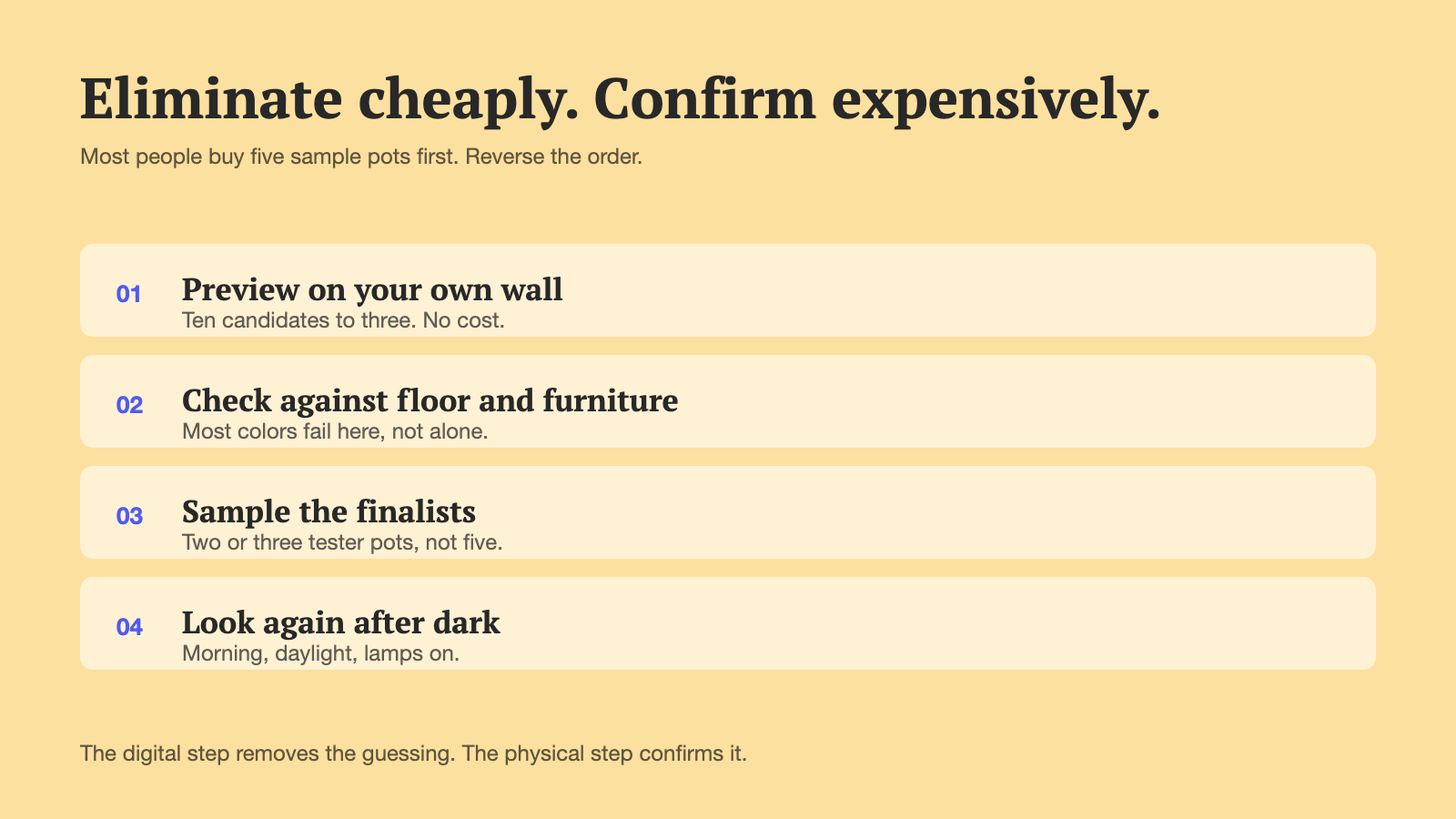
A small room usually has one light source and a lot of bounced color from the floor, the door, and whatever is directly outside the window. Those are exactly the conditions a store cannot reproduce, and exactly the ones that decide whether your chosen shade looks calm or dingy.
Photograph the wall, try the color in place, and look at it in the room's own light before you buy anything.
Questions people ask
Does white always make a small room look bigger?
No. White helps when the whole room stays low in contrast, and works against you when the trim, ceiling or doors are painted in a strongly different tone. In that case every edge is emphasised, which makes the boundaries of the room more obvious rather than less.
Should the ceiling be lighter than the walls in a small room?
Usually only slightly. A ceiling much lighter than the walls creates a hard line at the top of the wall, which caps the room. A ceiling in the wall color at half strength, or an off-white sharing the wall's undertone, keeps the corner soft and the room taller.
Can I paint a small room a dark color?
Yes, if you take it all the way. Dark walls with white trim and ceiling maximise contrast in a space that cannot afford it. Dark walls, ceiling and trim together remove the visible edges and make a small room feel deliberate and enclosing rather than cramped.
What color suits a small north-facing room?
Something warmer than you think. North light is cool and steady, so it drags colors toward grey. Shades with a warm undertone, soft clay, warm stone, muted ochre, hold their character. Cool greys and crisp whites tend to flatten in that light.
How do I know the color will work before I paint?
Try it on the actual wall, in the actual light. Photograph the room and preview the shade in place, then check it in the morning and again in the evening. Colors that survive both readings are the ones worth buying a tin of.
See the color on your walls first
Paint my Room paints a photo of your own room in any color, with its light and shadow kept. Free to download on iPhone, iPad and Android.