- Paint my Room
- Guides
- How to
How to test a paint color before you buy
The mistake is judging a color in the shop. Preview it on your own wall first, narrow to two or three shades, then sample only those, and look at each one in morning and evening light before you commit.
 Erik, Chief Colour Officer · 3 min read
You stand in the shop holding three cards under bright ceiling lights, pick one, buy the paint, get home, and it is wrong. This happens to almost everyone, and it is not a failure of taste. It is a failure of lighting.
Paint has no fixed appearance. What you see is the light in the room minus whatever the pigment absorbs. Change the light and you change the color. A shop is lit to make products look crisp and clean. Your living room at seven in the evening is lit by two warm bulbs and a lamp behind the sofa. Those are not the same conditions, and the card was never going to survive the trip.
The order that saves money
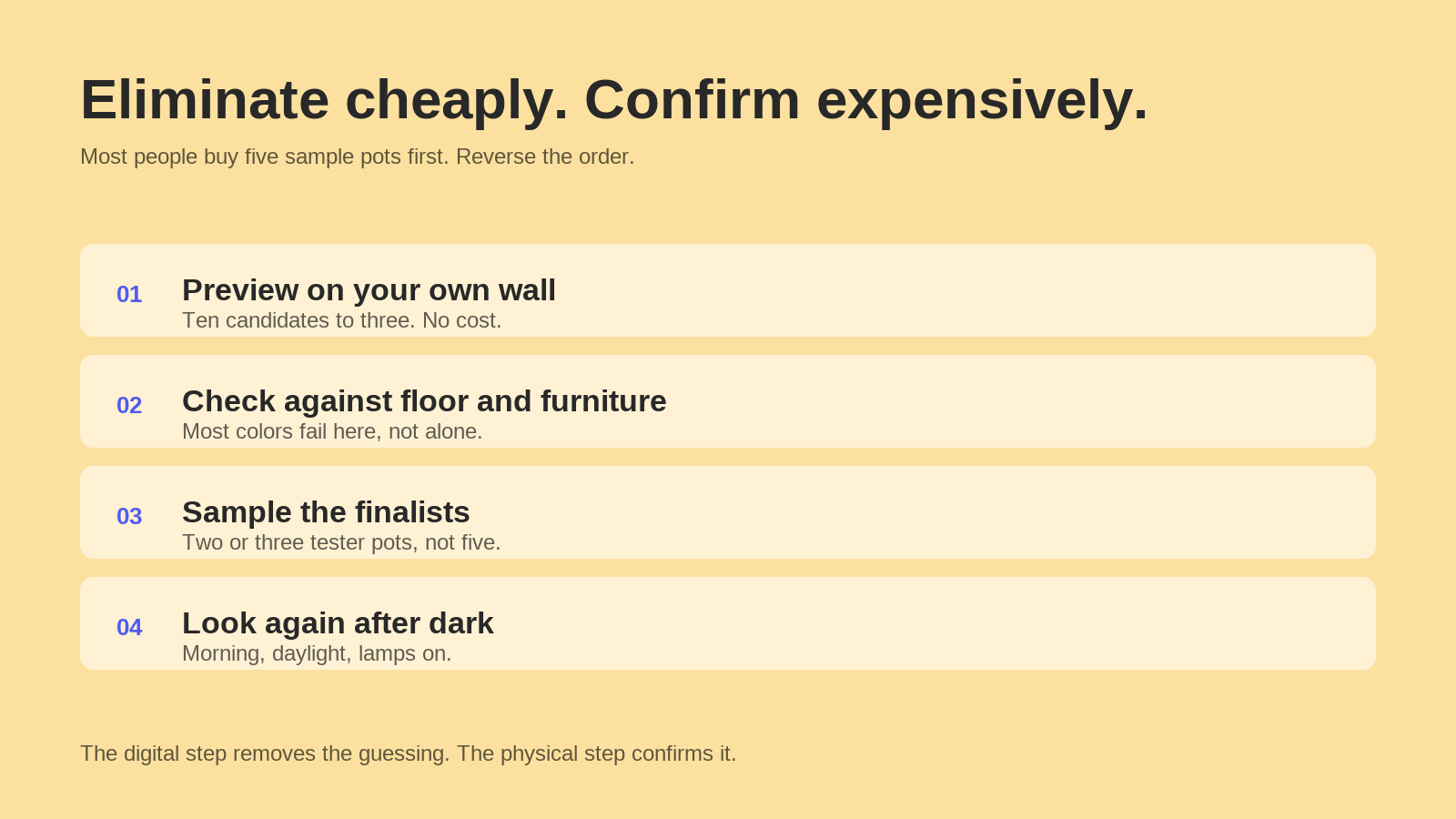
Most people do this backwards: they buy five sample pots, paint five patches, and then discover that three were never realistic. Reverse it.
- Preview on your own wall. Photograph the wall and try colors on it digitally. You are not looking for the final answer here, you are eliminating. Ten candidates become three in a few minutes, in the room's real light, at no cost.
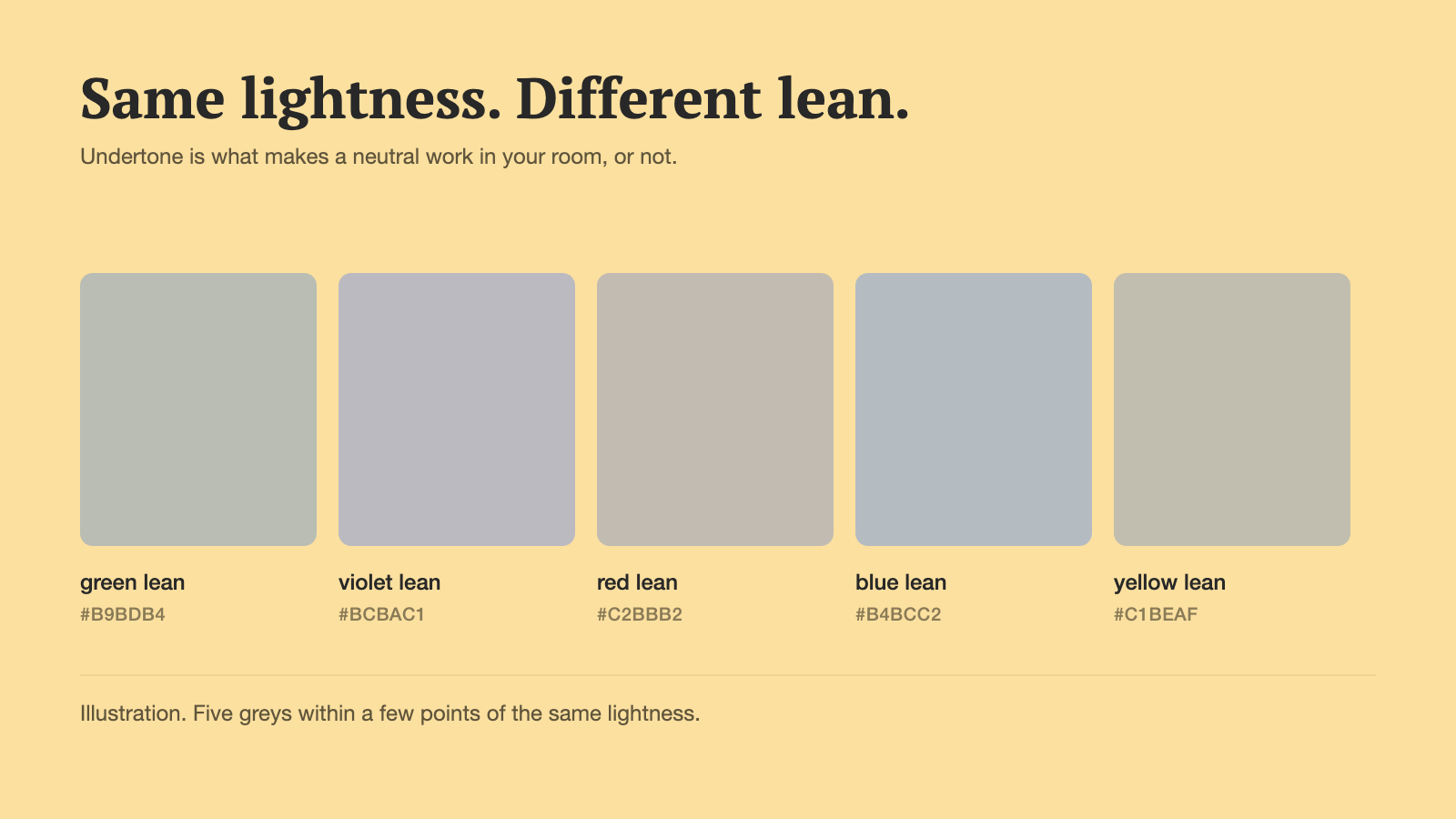
- Narrow by undertone, not by name. Once you have three, check what each one does next to your floor, your door and your largest piece of furniture. Colors fail against those far more often than they fail on their own.
- Sample the finalists physically. Now buy the two or three tester pots. You are confirming a decision, not exploring.
- Live with them for a day. Morning, afternoon, evening, lamps on. A color that holds up in all four is the one to buy.
Why you should not judge a sample on a white wall
This catches people constantly. You paint a patch of soft grey onto a white wall, step back, and it looks heavy and dark. So you go lighter. Then the finished room comes out washed out and weak.
The white around the patch is the problem. Your eye judges color relative to what surrounds it, so anything against bright white reads darker than it truly is. Two ways around it:
- Paint the sample onto a large piece of white card, then hold that card against the wall, floor and furniture in turn. You still get the white edge, but you can move it and see the color against different neighbours.
- Or paint a patch big enough that you can look at only the patch, at least an A3 area, ideally larger.
Where to put the patch
Not in the corner, and not behind the door. Corners collect shadow and bounce color off the adjoining wall, so a corner sample shows you a version of the color that appears nowhere else in the room.
Put samples on the wall you look at most, in the middle, away from edges. If the room has a bright window and a dark end, sample both, because that difference will be there permanently.
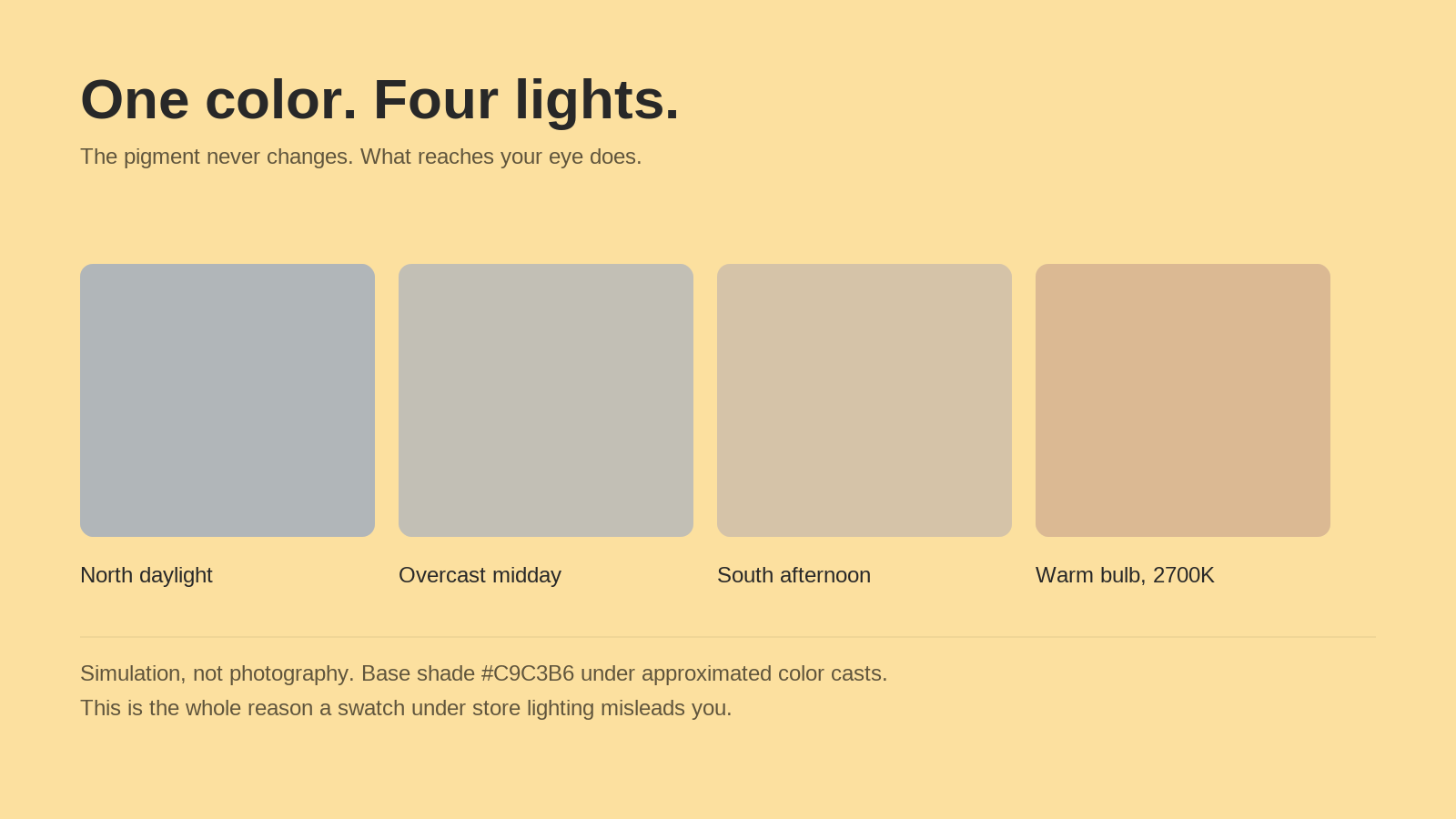
What to check across the day
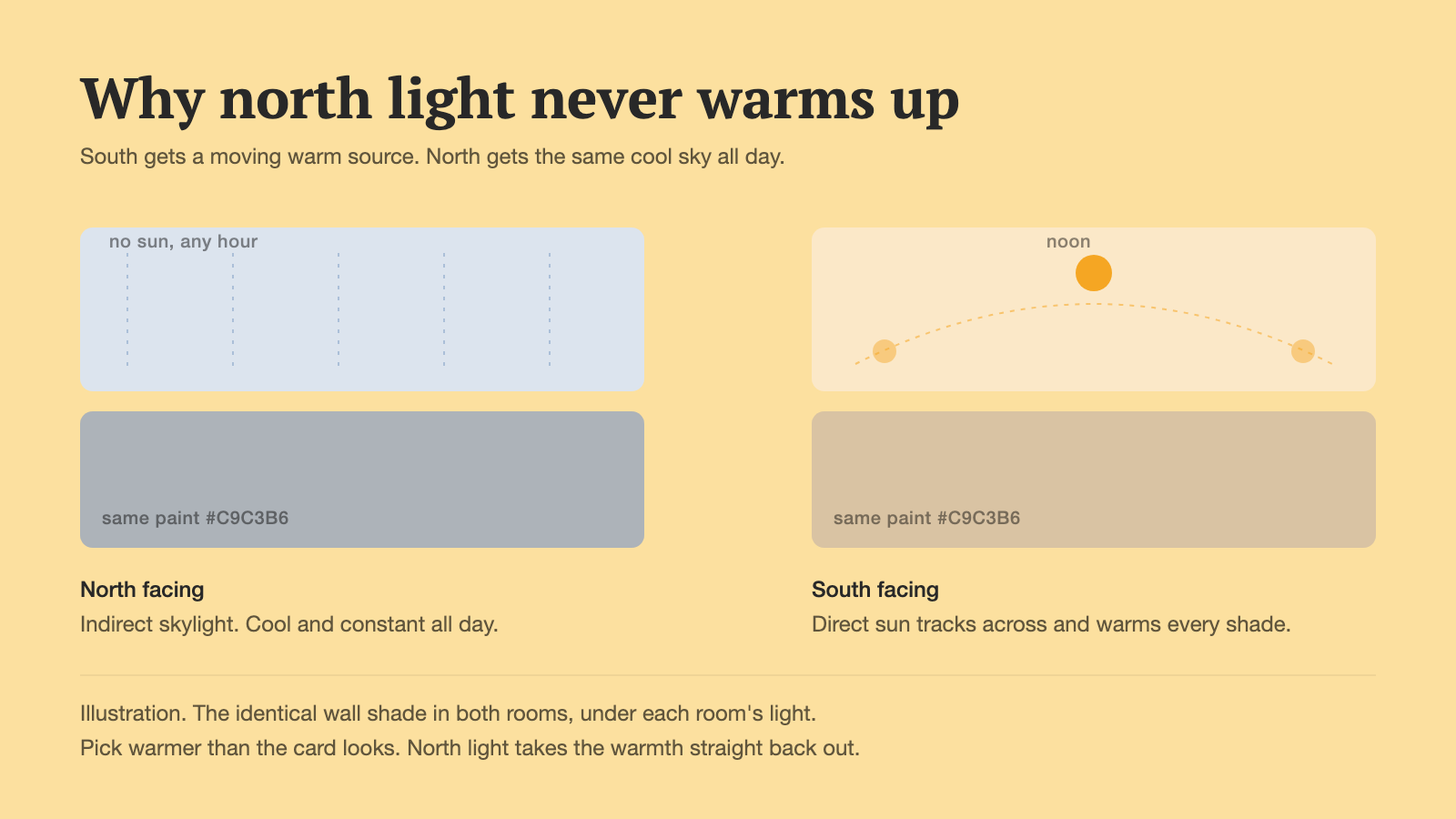
- Morning: cooler, especially in north and east-facing rooms. This is where warm colors earn their keep and cool greys can go flat.
- Midday: the truest reading of the pigment, and the least interesting one.
- Late afternoon: west-facing rooms get a strong warm cast that can push a neutral toward peach or yellow.
- Evening, lamps on: the reading that matters most in a bedroom or a living room, because that is when you are actually in there. Warm bulbs deepen warm colors and can turn cool greys slightly muddy.
The two-minute version
Photograph the wall, preview the shade in place, look at it in the room's own light, then sample only the ones that survived. The digital step is what removes the expensive guessing, and the physical step is what confirms it.
Questions people ask
Can I choose a paint color from a photo on my phone?
For narrowing down, yes, and it is the quickest way to eliminate most options. Previewing a color on a photo of your own wall shows it in your room's real lighting, which is far more informative than a swatch under shop lights. For the final commitment, still put a physical sample on the wall.
How big should a paint test patch be?
At least A3, and larger is better. Small patches are surrounded by the existing wall color, which distorts your reading of them. A big patch lets you look at the color on its own, which is how you will see it once the whole wall is done.
How long should I leave a test patch before deciding?
A full day at minimum, so you see it in morning light, daylight and under your evening lights. If the paint is a strong or unusual color, give it two or three days. First impressions of bold colors are unreliable in both directions.
Do I need to prime over a test patch before painting?
Usually not, if the new color is similar or darker. Over a dark test patch under a much lighter final color, spot-prime the patches first, otherwise they can ghost through and need an extra coat.
Why does the same paint look different in two rooms?
Because the light is different. Window direction, bulb temperature, the color of the floor and the size of the window all change what reaches your eye. The same tin can read warm and soft in one room and cold and flat in another, which is why testing in the actual room is the only reliable method.
See the color on your walls first
Paint my Room paints a photo of your own room in any color, with its light and shadow kept. Free to download on iPhone, iPad and Android.