- Paint my Room
- Guides
- Choosing color
Bedroom colors, and what they actually do
Color affects sleep mainly through brightness and saturation, not the hue itself. Muted, desaturated shades in low contrast calm a bedroom down, and how the color behaves under your evening bulbs matters more than how it looks at noon.
 Erik, Chief Colour Officer · 3 min read

Search for bedroom colours and you will find confident claims that one specific shade adds a measurable amount of sleep per night. Those numbers come from a hotel chain's survey, not from research, and they get repeated as fact. The useful version of this advice is duller and more reliable.
What a colour does in a bedroom comes down to how much light it reflects, how saturated it is, and how it behaves in the light you actually use at night.
Saturation, not hue
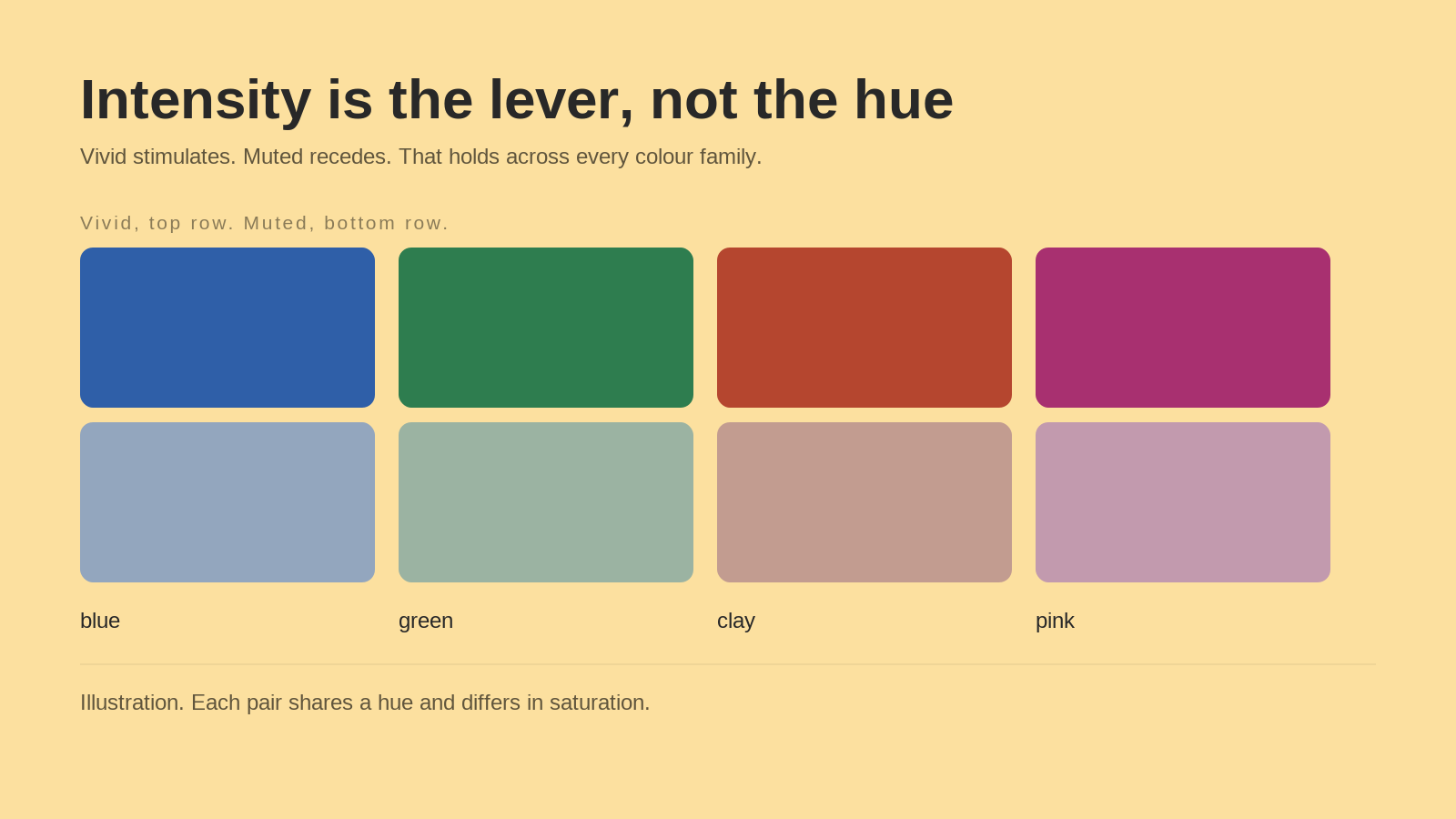
A saturated colour holds your attention. That is what saturation is for, which is why warning signs use it. Put a vivid version of almost any hue on four bedroom walls and the room becomes more stimulating.
Take the same hue and mute it, add grey, drop the intensity, and it recedes. A dusty blue, a soft sage, a muted clay and a greyed pink all do a similar job in a bedroom, despite sitting in different colour families. Choose by intensity first, then pick the family you like.
Bedrooms are evening rooms
Most rooms are judged in daylight. A bedroom is mostly experienced in the last hour of the day and the first, under artificial light.
Warm bulbs around 2700K deepen warm colours pleasantly and can leave cool greys and blues looking slightly dull or muddy. If you want a cool shade in a bedroom, check it under your actual bedside lamps before deciding, because that is the reading that counts.
Keep contrast low
The same principle that makes a small room feel bigger makes a bedroom feel calmer. Every hard tonal edge is something for your eye to find.
Walls, trim and ceiling in the same family, separated by finish rather than by tone, produce a room with soft boundaries. Bright white trim against a mid-tone wall produces a room full of lines. In a space whose job is winding down, fewer lines is better.
Dark bedrooms: good for sleep, plan the lighting
A deep, enveloping bedroom is genuinely restful and works with the fact that the room is dim at the hours you use it. Deep green, ink blue, warm charcoal all suit the purpose.
The catch is practical, not aesthetic. Dark walls absorb light, so tasks that need it, reading, choosing clothes, doing your face, need dedicated lighting rather than one central bulb. Solve that first and a dark bedroom is one of the easier rooms to get right.
What about children's bedrooms?
Same rule, more strongly. Vivid primaries look cheerful in a shop and are stimulating on four walls at bedtime. Muted versions of the same colours, with the vivid ones kept to bedding, art and toys, give you the character without the intensity where it is not wanted.
Five shades, and the mood each one sets
Pick the mood first, then the colour. All five below are muted, which is the point.
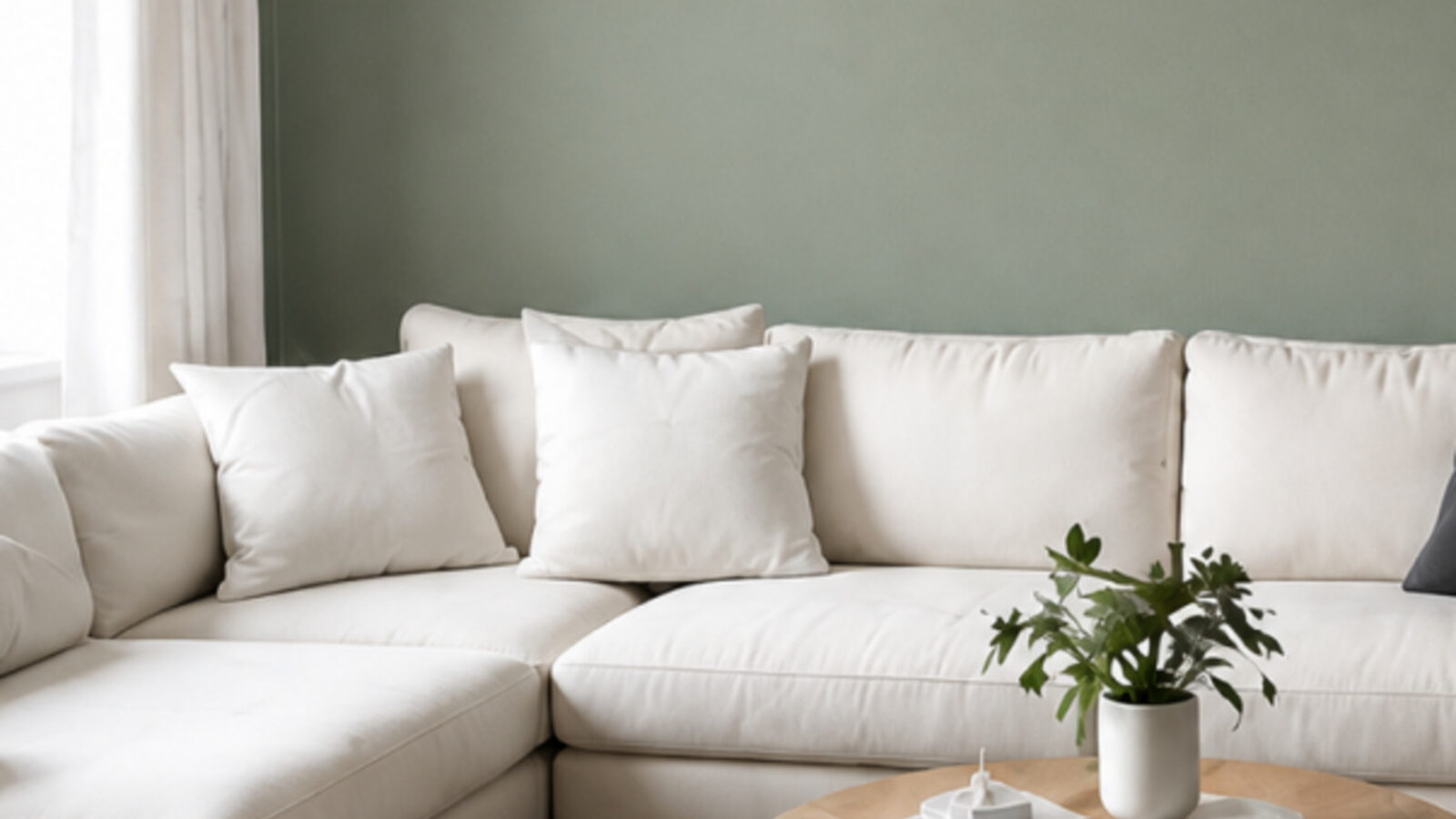
- Sage green, the calm one. Green sits in the middle of the visible spectrum, the easiest place for the eye to rest. Muted sages read as restorative. Pair with warm wood and off-white linen.
- Soft navy, the cocoon. A deep, desaturated blue makes a room feel enclosed and safe rather than cavernous. Blue is also associated with a cooler perceived temperature, so navy suits a warm, sunny bedroom. Keep the trim light.
- Warm terracotta, the hug. Earthy clay is warm without shouting the way a pure red does. Best in a room that feels cold or flat and needs bringing up.
- Dusty pink, the soft energy. Not nursery pink. A greyed-off rose reads gentle and modern, and it flatters skin tone in morning light.
- Warm off-white, the breathing room. The classic, for a reason. Keeps a small bedroom open and lets bedding, art and light do the talking.
Notice that none of them is vivid. That is the takeaway from the section above doing its work: the mood comes from how muted the shade is, not from which family it belongs to.
Test it at night
The one habit that prevents regret here: look at your shortlist in the room, in the evening, with the lamps on. Preview the shade on a photo of the wall, then check the finalists after dark. A colour that reads well at 10pm is the right colour for a bedroom, whatever it does at noon.
Questions people ask
What is the best bedroom color for sleep?
There is no single best hue. What reliably helps is low saturation and low contrast: a muted shade, with trim and ceiling close to the wall in tone, so the room gives the eye little to track. Muted blues, greens, clays and greyed pinks all achieve this equally well.
Is it true that blue bedrooms make you sleep longer?
That claim traces back to a hotel chain's customer survey, not to controlled research, and the specific hours quoted should not be treated as fact. Muted blue is a good bedroom colour for the same reason muted anything is: low intensity, low stimulation.
Can a bedroom be painted a dark color?
Yes, and dark bedrooms suit their purpose well, since the room is mostly used when it is dim anyway. The real constraint is task lighting: dark walls absorb light, so reading and dressing need dedicated lamps rather than one ceiling fixture.
What color should a child's bedroom be?
Muted versions of the colours they like, with the vivid ones on bedding, art and toys instead of on all four walls. Saturated primaries are stimulating at scale, which is the opposite of what a room used for sleeping needs, and they date faster.
Should the bedroom ceiling be white?
Not necessarily, and often not. A bright white ceiling above a mid-tone wall draws a hard line around the room. The wall colour at half strength, or an off-white sharing its undertone, keeps the boundary soft, which suits a room meant for winding down.
See the color on your walls first
Paint my Room paints a photo of your own room in any color, with its light and shadow kept. Free to download on iPhone, iPad and Android.