- Paint my Room
- Guides
- Choosing color
Warm white, without the yellow
A warm white goes yellow when its undertone is stronger than your room's light can carry. Choose whites with a soft beige, grey or slightly pink base, compare them to plain printer paper, and check them on your own walls morning and evening.
 Erik, Chief Colour Officer · 2 min read
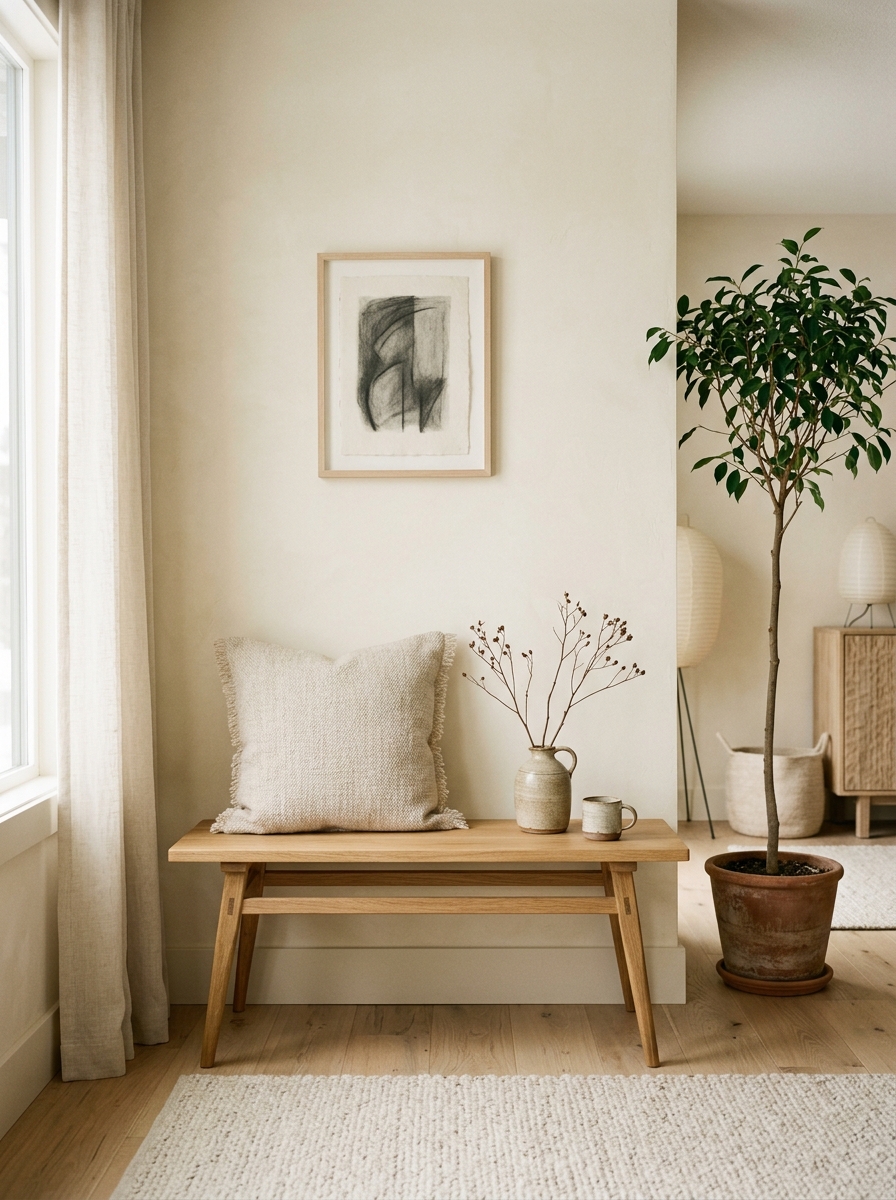
People ask for a warm white with no yellow because they have been burned before. The chip looked like a gentle off-white, and the finished room looked like old cream. The paint did not change. The size and the light did.
Why warm whites turn yellow on the wall
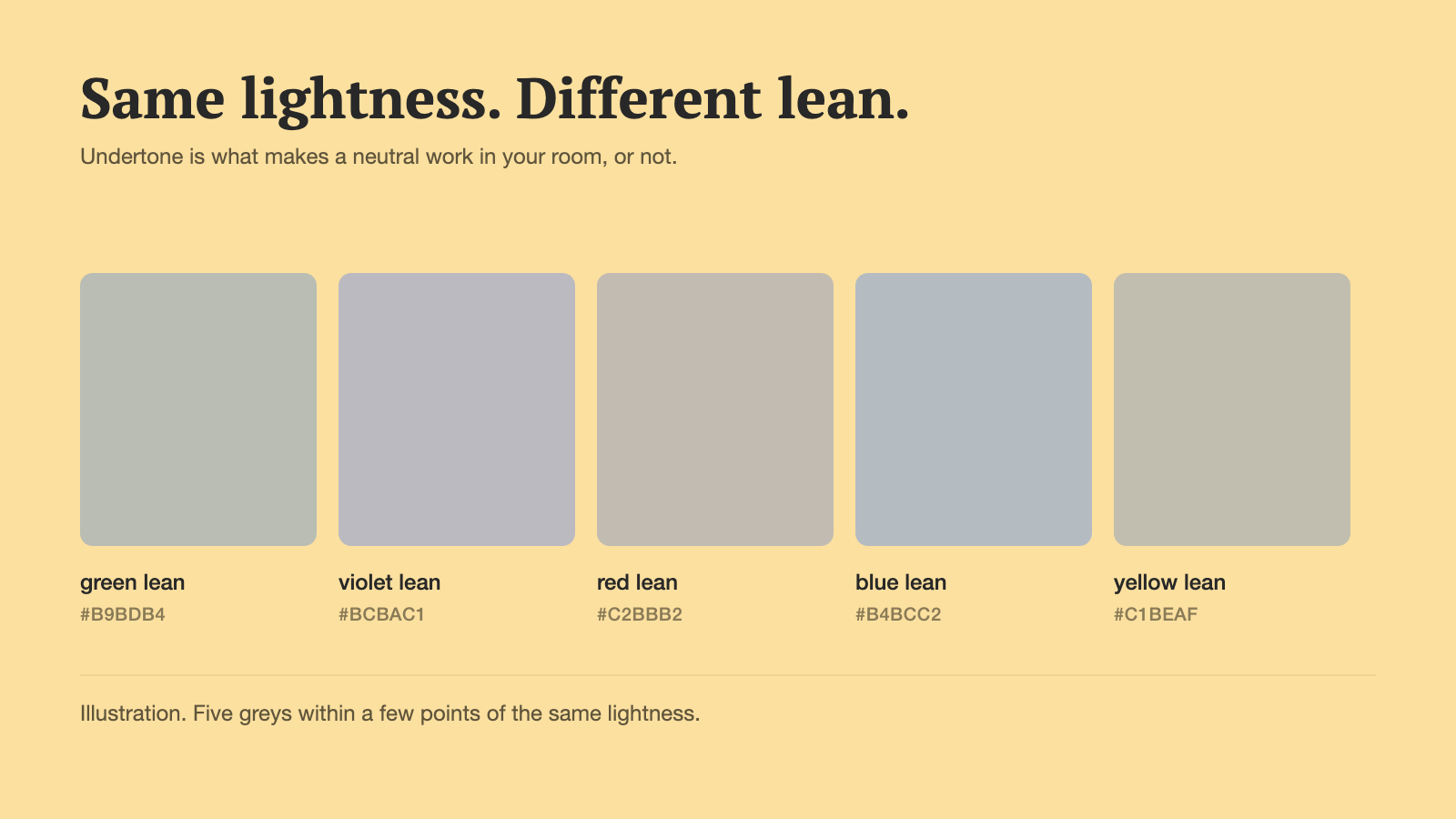
Every off-white has an undertone, a small amount of another hue mixed into the white. On a chip that undertone is barely visible. On a full wall it is multiplied by area, then multiplied again by the light in your room.
Warm bulbs in the evening add yellow light. South-facing windows add warm light all afternoon. Stack those on a white that already leans yellow, and the room tips into cream. The fix is choosing a white whose warmth comes from something other than yellow.
The undertones that stay warm but not yellow
- Beige or greige base. Reads soft and natural, pairs with oak and linen, and rarely looks yellow.
- A touch of grey. Calms the warmth down. Good for bright south rooms where light already does the warming.
- A faint pink or peach base. Feels warm and flattering in north rooms that need the help, without the buttery look.
Avoid whites described as creamy, buttery or ivory if yellow is your worry. Those words usually mean a clear yellow base.
The printer paper test
Hold a sheet of plain white printer paper next to each sample. Against true white, every off-white shows its real lean right away: this one is yellow, this one is pink, this one is grey. It takes seconds and removes most of the guessing before you buy anything.
Do the test on the wall itself, not in your hand, and in the room the paint is going into.
Match the white to your light
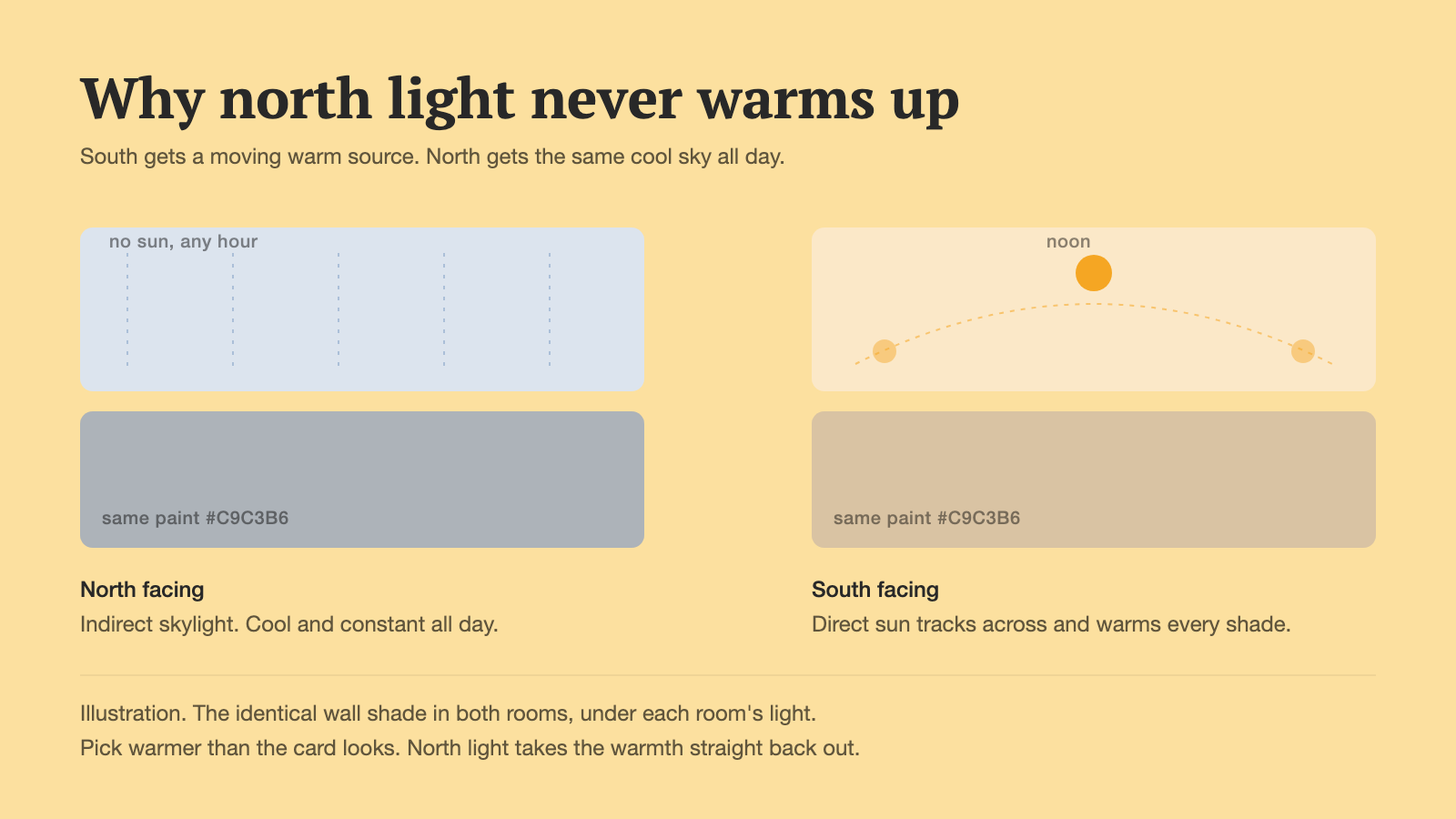
- North-facing rooms have cool, blueish light. A warm white with a beige or pink base keeps them from looking grey, and yellowing is rarely the problem.
- South-facing rooms have strong warm light. Pick a warm white with some grey in it, or it will look yellow by late afternoon.
- Rooms used mostly at night live under bulbs. Check samples under your own lamps, because that is when the room is actually seen.
Preview before you sample
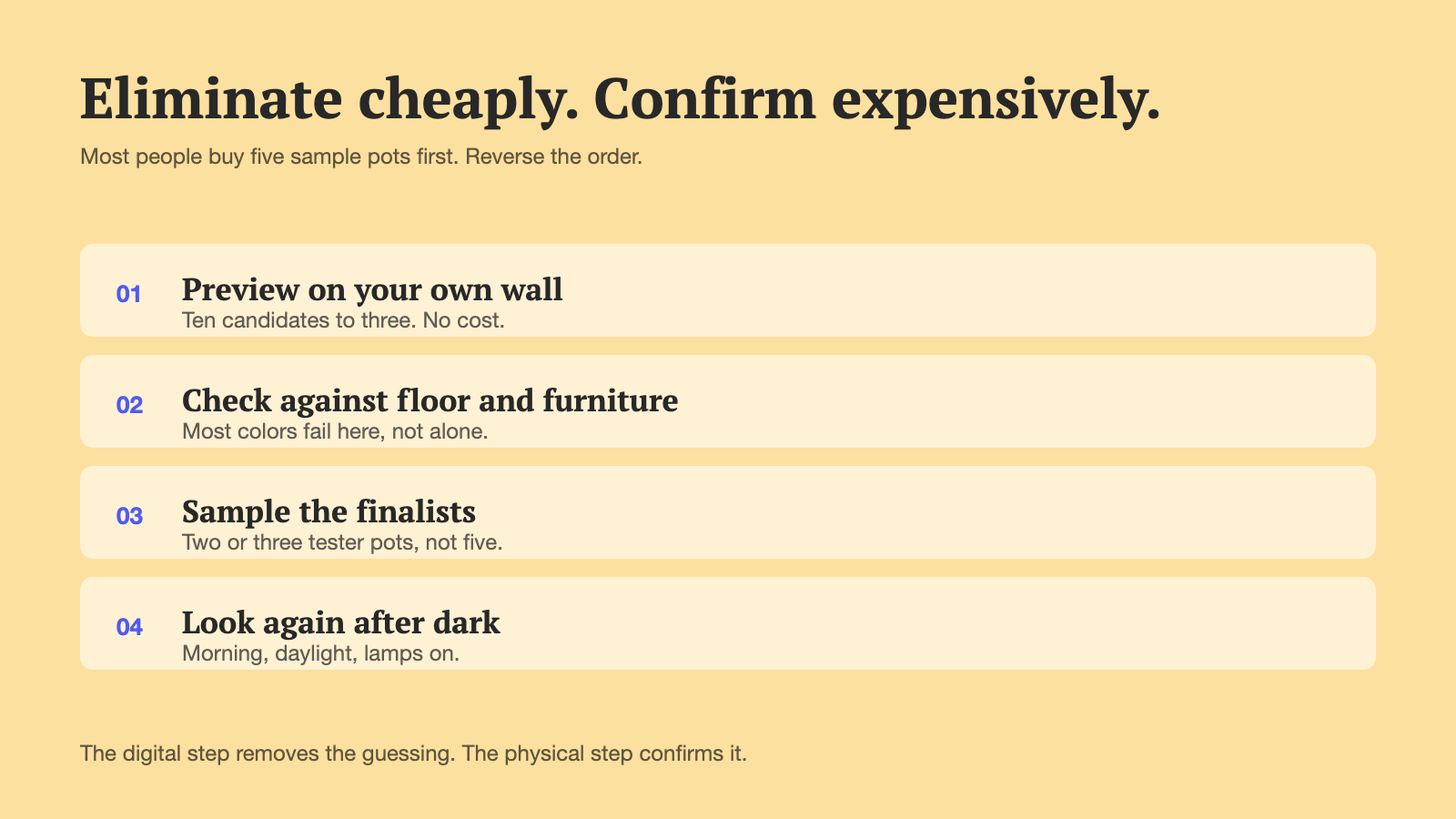
White is the hardest color to judge on a small chip, because the differences are subtle until they cover a wall. Take a photo of the room and preview a few candidate whites on the walls side by side. Paint my Room does this from a single photo, so you can rule out the yellow-leaning ones before buying two final testers to check in morning and evening light.
Questions people ask
What makes a white paint look yellow?
A yellow undertone in the paint, magnified by the size of the wall and by warm light from south windows or evening bulbs. A white that looks neutral on a small chip can read clearly yellow across a full room, especially at night.
Which warm white works best in a north-facing room?
A white with a soft beige or slightly pink base. North light is cool, so it pulls whites toward grey or blue. A gently warm white counters that, and in north light it is very unlikely to look yellow.
Will LED bulbs make my white walls look yellow?
They can if the bulbs are warm. Bulbs labelled around 2700K give a warm, slightly yellow light that pushes warm whites further that way. Bulbs around 3000K to 4000K are more neutral. Check your samples under the bulbs you actually use.
How many white samples should I test?
Preview as many as you want digitally, then narrow to two physical samples. Paint them large, next to each other, and check them in daylight and again at night. Testing five real samples side by side mostly makes the subtle differences harder to see.
Sources
- Color temperatureon how warm and cool light, including bulb Kelvin ratings, changes how a white reads.
- Shades of whiteon the range of off-whites and their undertones.
- Color rendering indexon why the same paint looks different under different bulbs.
See the color on your walls first
Paint my Room paints a photo of your own room in any color, with its light and shadow kept. Free to download on iPhone, iPad and Android.